Household Biohazards: Sharps, Rodent Droppings & Waste Disposal Guide
Household Biohazards: Sharps, Rodent Droppings & Waste Disposal Guide
Two rules govern every household biohazard: contain it properly, and never put it in the regular trash loose. Below are the specific rules for the three biohazards that show up in ordinary homes — used needles, rodent droppings, and biohazard waste — plus the full guides for each.
- A used needle in household trash can injure sanitation workers — rigid sealed container, then a pharmacy, mail-back program, or hazardous-waste drop-off.
- Never sweep or vacuum rodent droppings, not even with a HEPA vacuum. The nozzle stirs contaminated dust into the air before it ever reaches the filter.
- The most dangerous moment with droppings is the cleanup itself — droppings sitting undisturbed are far less hazardous than droppings being swept.
- Disposal rules are state-by-state. What’s legal in your trash in one state is a violation in another — check before you bag.
These three hazards share one trait: the intuitive response is usually the wrong one. People toss needles in the trash, sweep up droppings with a broom, and bag bloody materials like ordinary garbage — and each shortcut creates the exact injury or exposure the rules exist to prevent. The rules below are short. Follow them literally.
Sharps: needles, syringes, and lancets
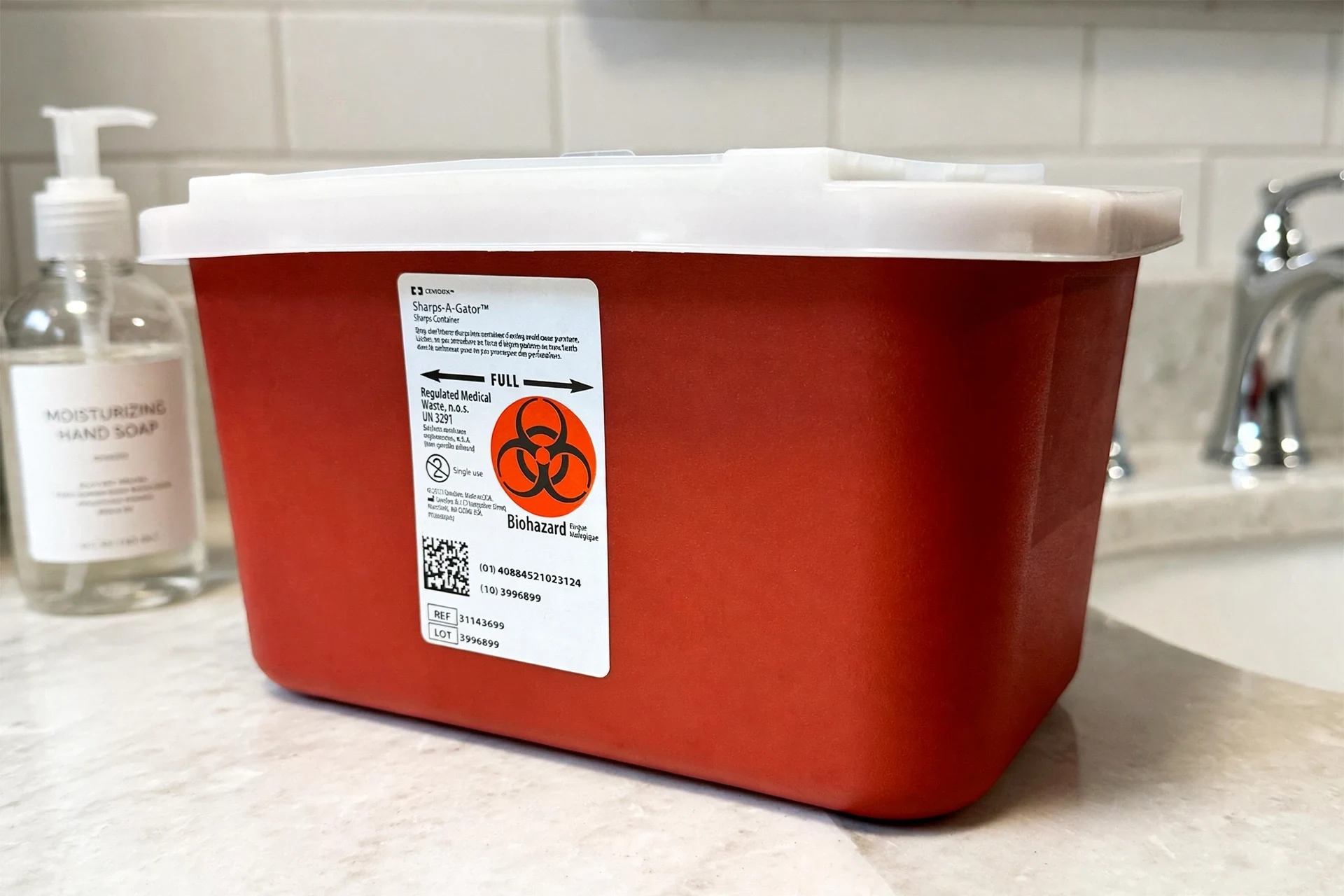
A “sharp” is anything that can puncture skin: hypodermic needles, syringes, lancets, auto-injectors. They show up in homes for legitimate reasons — diabetes care, prescribed injections, veterinary use — and the disposal rules exist because a loose needle in a trash bag can injure whoever handles that bag next.
- Contain immediately.
Drop used sharps straight into a rigid, puncture-resistant container with a tight lid — an FDA-cleared sharps container is ideal; a heavy-duty laundry-detergent bottle works in a pinch. Never a milk jug or thin plastic: needles punch through.
- Never put sharps in recycling. Ever.
Recycling is hand-sorted at facilities. A needle in the recycling stream is one of the most dangerous things a sorter can encounter.
- Dispose through a proper channel.
Options vary by area: pharmacy drop-off programs, mail-back services, household hazardous-waste collection days, or supervised collection sites. SafeNeedleDisposal.org lets you look up options by ZIP code. Note: some pharmacies refuse sharps — call ahead rather than assuming.
- Found a needle in public?
Don’t pick it up barehanded. Use gloves or tongs, grasp the barrel (never the needle end), place it needle-first into a rigid container, and take it to a pharmacy or health unit. Teach kids the rule in four words: never touch, tell an adult.
Rules differ by state — a few states ban sharps in household trash entirely, while others allow sealed containers. Our needle disposal guide covers the state-by-state patchwork and the pharmacy-refusal problem in detail.
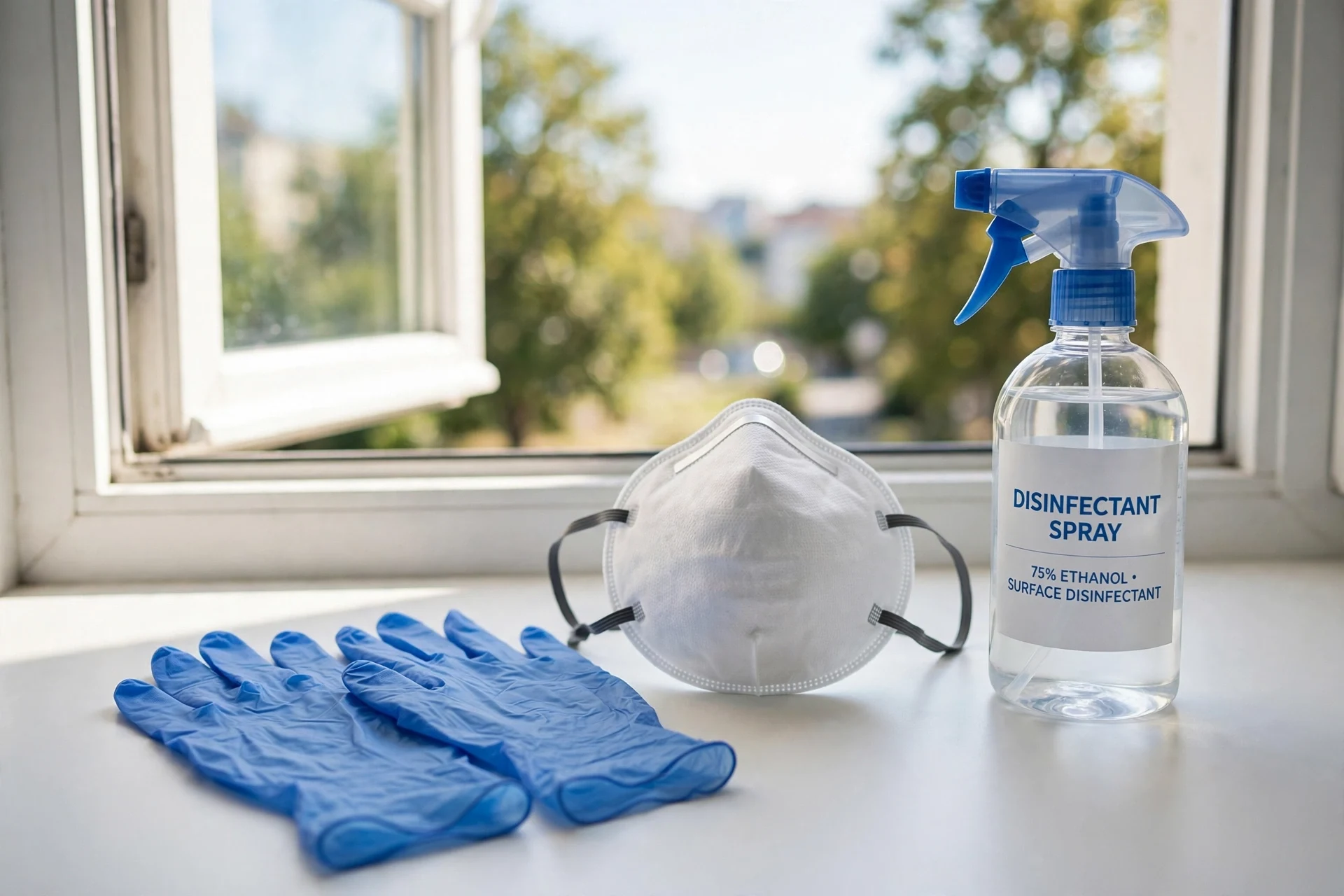
Rodent droppings: the cleanup is the exposure event
Here’s the inversion most people miss: droppings sitting undisturbed are relatively inert. The dangerous moment is the well-intentioned cleanup. Sweeping or vacuuming launches dried urine, droppings, and nesting material into the air as fine dust — and that dust is the exposure route for hantavirus, the rare but serious illness carried by deer mice. Health agencies report roughly 40% fatality among confirmed HPS (hantavirus pulmonary syndrome) cases. The virus is rare; the cleaning mistake is common.
The safe procedure, per CDC guidance:
- Ventilate for 30 minutes.
Open doors and windows and leave the space before you start. Let the air turn over.
- Gear up.
N95 or P100 respirator (not a paper dust mask), rubber or latex gloves. Long sleeves.
- Soak, don’t sweep.
Saturate droppings, nests, and dead rodents with a 1:10 bleach solution or an EPA-registered disinfectant. Let it soak 5–10 minutes — the liquid keeps dust down while the disinfectant works.
- Wipe up with paper towels.
Lift, don’t drag. Double-bag everything in sealed plastic bags.
- Mop hard floors with disinfectant.
Then wash your gloved hands, remove gloves, and wash bare hands thoroughly.
The HEPA-vacuum myth deserves its own callout: a HEPA filter does not make vacuuming droppings safe. The nozzle stirs contaminated dust into the room’s air before any of it reaches the filter. This is the single most dangerous misconception in droppings cleanup. Our mouse droppings guide and rat droppings guide cover deer-mouse identification and regional risk in full.
Biohazard waste at home: what counts and where it goes
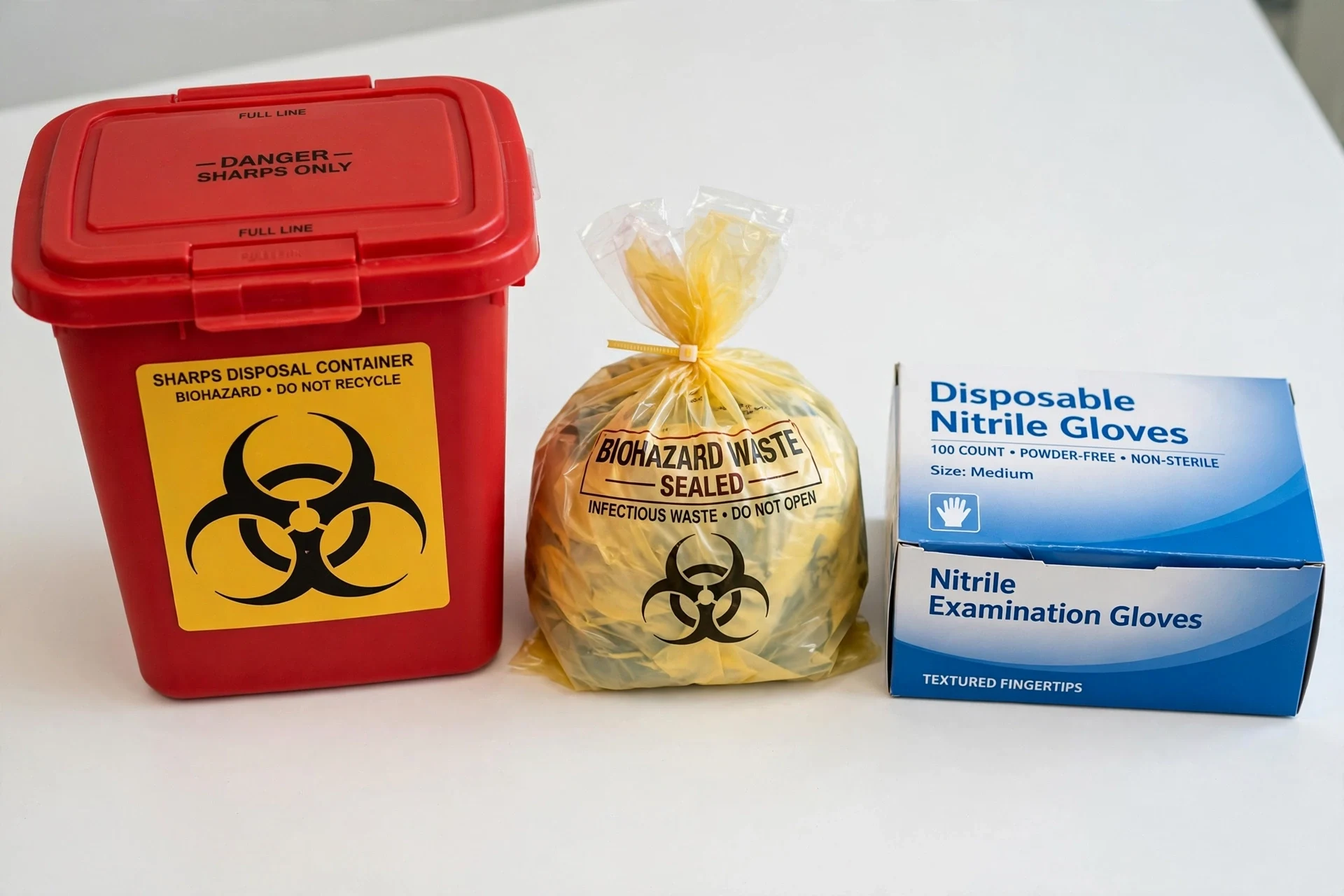
“Biohazard waste” sounds like a hospital term, but it shows up in houses: blood-soaked bandages and bedding, used sharps, materials contaminated with bodily fluids, and anything from a trauma or unattended-death cleanup that professionals bagged and left for disposal. The rule of thumb: if it’s saturated with blood or bodily fluids, treat it as biohazard waste, not trash.
What that means in practice: double-bag in sturdy bags, label the outer bag, keep it out of household trash and recycling, and take it to a household hazardous-waste facility or a medical-waste drop-off — your county’s waste authority lists locations. Rules are state-specific (Illinois, for example, has strict disposal procedures with fines for violations), so check your state’s environmental agency rather than assuming the national rule. Our biohazard waste guide walks through compliant containers, drop-off options, and the state-by-state differences.
The in-depth guides
Four guides, each covering one hazard completely — including the state-by-state rules and edge cases the summaries above skip.
How to dispose of needles and sharps
The complete sharps guide: compliant containers (and which household bottles actually work), the pharmacy-refusal problem and its workarounds, mail-back programs, found-needle protocol for parents and landlords, and what to do after a needlestick.
Biohazard waste disposal at home
What legally counts as biohazard waste in a household, compliant container and labeling rules, where to take it, and the state-by-state differences that determine whether your trash plan is a violation.
Mouse droppings: safe cleanup
The full CDC-aligned procedure: ventilation, PPE, the bleach-soak method, hantavirus symptoms and timelines, deer mouse vs. house mouse identification, and the seasonal-cabin reopening checklist.
Rat droppings: safety guide
Rat-specific guidance: larger droppings, different nesting patterns, the same no-sweep rule, regional risk differences, and when droppings signal an infestation that needs a pest professional first.
Common questions about household biohazards
Can I put needles in the household trash?
It depends on your state — many allow sealed rigid containers in household trash, a few ban it entirely, and no state allows loose sharps or sharps in recycling. Check your state’s rules (or look up options by ZIP at SafeNeedleDisposal.org) rather than guessing.
What should I do if I find a needle in public?
Don’t touch it barehanded. With gloves or tongs, pick it up by the barrel — never the needle end — place it needle-first into a rigid container, and take it to a pharmacy or health unit. Teach children: never touch, tell an adult.
Can I vacuum mouse droppings?
No — not even with a HEPA vacuum. The vacuum nozzle stirs contaminated dust into the room’s air before any of it reaches the filter. Soak droppings with disinfectant and wipe them up instead.
How dangerous is hantavirus, really?
Infection is rare, but serious: health agencies report roughly 40% fatality among confirmed HPS cases. Deer mice are the primary reservoir. The risk comes from inhaling dust during cleanup — which is exactly why the no-sweep rule exists.
What’s the right way to clean up mouse droppings?
Ventilate 30 minutes, wear an N95 respirator and gloves, saturate the droppings with a 1:10 bleach solution for 5–10 minutes, wipe up with paper towels, double-bag, and mop hard floors with disinfectant.
What counts as biohazard waste at home?
Anything saturated with blood or bodily fluids: blood-soaked bandages or bedding, used sharps, contaminated cleanup materials. Double-bag it, label it, keep it out of household trash and recycling, and take it to a hazardous-waste or medical-waste drop-off — rules vary by state.
Sources
- CDC — hantavirus guidance: cleanup procedures, PPE, symptoms, and deer-mouse reservoir information. cdc.gov/hantavirus
- FDA — sharps disposal guidance for households (containers, drop-off, mail-back). fda.gov
- SafeNeedleDisposal.org — ZIP-code lookup for sharps disposal options. safeneedledisposal.org
- OSHA Bloodborne Pathogens Standard, 29 CFR 1910.1030 — exposure control for blood and bodily fluids. osha.gov
Disposal rules cited here are general US guidance — sharps and medical-waste rules are set state by state, so verify with your state’s environmental or health agency.
Not sure whether something counts as biohazardous?
Our biohazard basics explain what the term actually covers — and where the line sits between a household problem and a job for professionals.