

The Complete Guide to Helping Someone Who Hoards
The Complete Guide to Helping Someone Who Hoards
If someone you love is buried in clutter, you already know the hardest part isn’t the stuff — it’s the stalemate. Below is everything a family needs: how to help, what to do when they refuse, what cleanup costs, and where to find support.
- Hoarding disorder is a recognized mental health condition, not laziness or a character flaw. Treat it like one.
- Surprise cleanouts backfire — they destroy trust and the clutter usually comes back worse.
- When they refuse all help, legal options exist: adult protective services, code enforcement, and guardianship each have specific thresholds.
- Cleanup costs vary enormously by volume and contamination; government and nonprofit programs can help pay in some cases.
Most families arrive here the same way: months or years of worry, one breaking point — a fall, a landlord’s notice, a smell from the hallway — and no idea what to do next. This guide is organized around the questions families actually ask, in the order they tend to ask them. Start wherever you are.
First, understand what you’re dealing with
Hoarding disorder involves persistent difficulty discarding possessions, regardless of their value — driven by a perceived need to save them and distress at the thought of letting go. It often runs alongside anxiety, depression, ADHD, or OCD, and it frequently worsens after loss or trauma. That context matters because it changes the strategy: you are not negotiating with stubbornness, you are working around a condition.
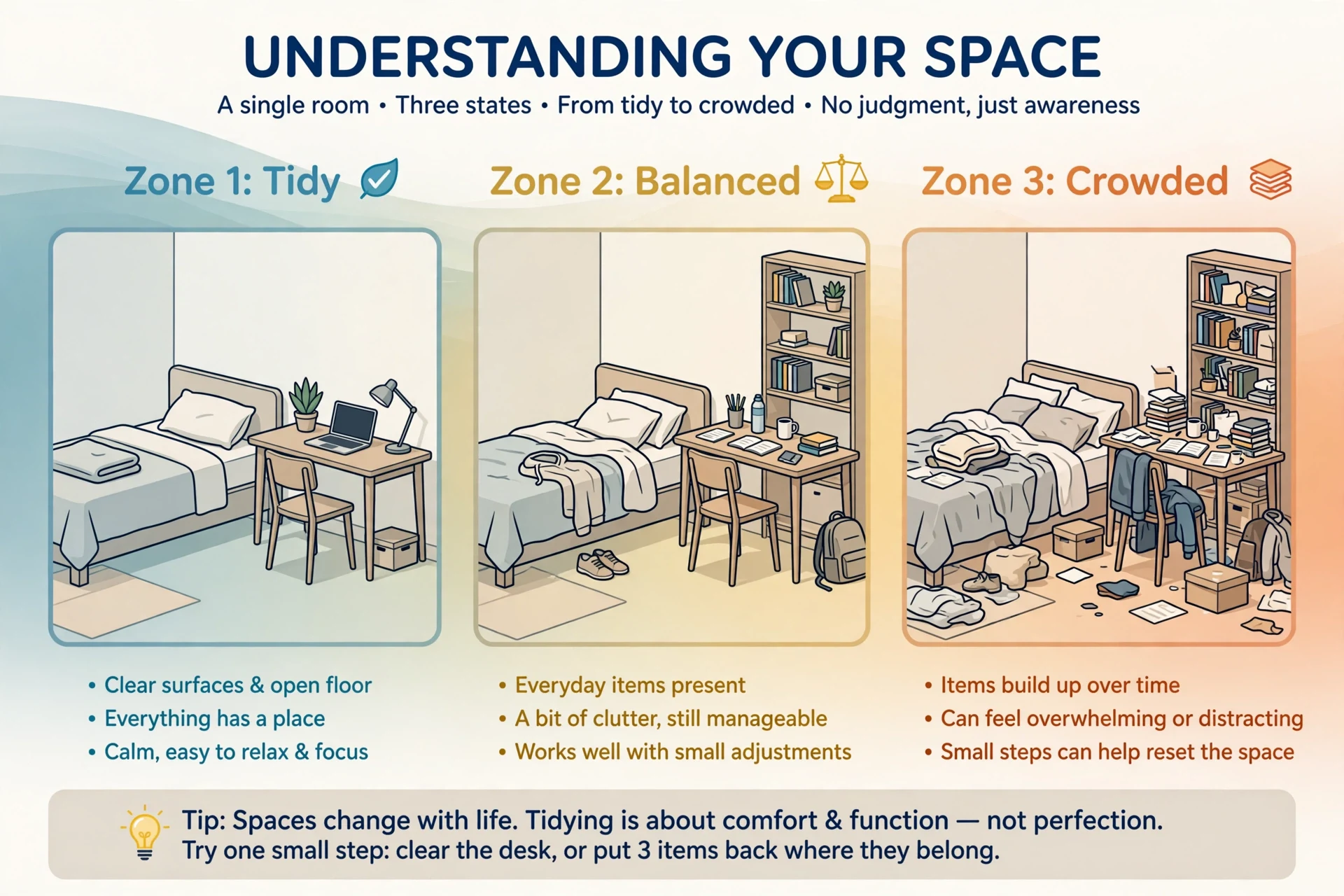
Two distinctions help families calibrate. Hoarding vs. collecting: collectors organize, display, and take pride in their items; hoarding brings shame, distress, and rooms that can’t be used. The five levels of hoarding (measured on the Clutter Image Rating scale) run from a lived-in home with minor clutter to a structure that is unsafe to enter — and each level calls for a different response. Our guides below explain both in full.

How to actually help
The research — and every experienced family — converges on the same principles. Lead with compassion, not ultimatums. Work on one small area at a time, not the whole house. Focus on safety over tidiness: a clear path to the bathroom matters more than an organized bookshelf. And respect their autonomy over their possessions; decisions made together hold, decisions imposed don’t.
When none of that works — when the person refuses every offer of help — families still have legitimate options. Adult protective services can intervene when a vulnerable adult’s health or safety is at risk. Code enforcement can act when a property violates health or fire codes (though this can backfire and should be a last resort). Guardianship or conservatorship is possible in severe cases but is a serious legal step with a high bar. Our refusal guide walks through each option’s real thresholds, because “be patient” is not a plan.
The practical side: cost, cleanup, and who pays
At some point the question becomes concrete: what does it cost to clean this up, and who pays for it? Hoarding cleanup costs scale with volume, contamination (mold, pests, animal waste), and whether structural work is needed — a light clear-out and a full biohazard remediation are different jobs with different price tags. Estate cleanout services, hoarding-specific cleanup companies, and junk removal each handle different slices of the work; knowing which one you need saves thousands.
And in some situations, you may not have to pay alone. Government programs, area agencies on aging, and nonprofit grants can cover part of cleanup costs for qualifying households — particularly seniors and people with disabilities. Our programs guide lists what’s actually out there and how to apply.
Every guide in this cluster
Each guide below goes deep on one piece of the picture. They’re written to stand alone, but they link to each other — follow the thread that matches where you are right now.
How to help a hoarder: a family guide
The starting point for families: compassionate communication, harm reduction over total cleanouts, setting boundaries, and guiding a loved one toward professional help — including the legal options most guides skip.
When they refuse all help
The hardest situation, answered honestly: what you can legally do when someone won’t accept help — adult protective services thresholds, code enforcement, guardianship reality, and what actually backfires.
Hoarding cleanup cost
What drives the price: volume, contamination level, labor, and disposal. Honest ranges for light clear-outs through full biohazard remediation, plus the questions that separate fair quotes from gouging.
The 5 levels of hoarding
What each level looks like in plain language, how professionals assess severity, and what each level actually requires — from a weekend of organizing to professional intervention.
Hoarding vs. collecting
The distinction that matters: organization vs. chaos, pride vs. shame, usable rooms vs. unusable ones. Includes the signs that collecting has crossed into a disorder.
Support groups and resources
Where families and people with hoarding disorder find help: peer support groups, therapist directories, the IOCDF hoarding center, and crisis-adjacent resources — verified and current.
Cleaning out the house after they die
The guide nobody wants to need: executor responsibilities, where valuables hide in hoarded homes, when to get a biohazard assessment before family enters, and handling the grief alongside the logistics.
Estate cleanout services
What estate cleanout companies do, how they differ from hoarding cleanup and junk removal, what they cost, and how to choose one without getting taken advantage of during a vulnerable time.
Government help for hoarders
Programs that can pay for cleanup: federal, state, and local assistance, senior-focused aid, and nonprofit grants — what exists, who qualifies, and how to apply.
Common questions from families
Can a hoarder be evicted?
Sometimes, but it’s complicated. A landlord can act on lease violations like fire hazards or health-code breaches — yet hoarding disorder may qualify as a disability under fair-housing law, which can require reasonable accommodation before eviction. The specifics depend on your state and lease.
What happens if you throw away a hoarder’s belongings without permission?
It causes severe emotional distress, destroys trust, and the research is clear on the outcome: the person typically re-accumulates, often worse than before. Unauthorized clearouts are the single most counterproductive thing families do.
What are the five levels of hoarding?
The Clutter Image Rating scale runs from Level 1 (a lived-in home with minor clutter) to Level 5 (structural damage, no utilities, rooms unusable and unsafe to enter). Each level calls for a different response — our levels guide explains what each one looks like and requires.
Is hoarding a mental illness?
Yes. Hoarding disorder is a recognized diagnosis in the DSM-5, distinct from OCD though often overlapping with it. It’s associated with difficulty discarding, strong emotional attachment to objects, and significant distress or impairment — which is why treatment addresses the condition, not just the clutter.
Who pays for hoarding cleanup?
Usually the homeowner or their family — but not always alone. Government programs, area agencies on aging, and nonprofits can help qualifying households, particularly seniors. Our government-help guide lists current programs and eligibility.
Where can I find a support group for families of hoarders?
The IOCDF hoarding center maintains directories, and peer-led groups exist both in person and online. Our support-groups guide lists verified options for both the person hoarding and their family members.
Sources
- International OCD Foundation (IOCDF) — Hoarding Center resources for families. hoarding.iocdf.org
- SAMHSA National Helpline — 1-800-662-4357 — treatment referrals and support. samhsa.gov
- NAMI (National Alliance on Mental Illness) — family support and education. nami.org
- NIMH — hoarding disorder clinical overview. nimh.nih.gov
BioRecoveryUSA is an independent publisher of cleanup-safety guides, not a cleanup company. Mental-health content here is informational and support-first — it is not a diagnosis and not a substitute for professional care.
Facing a hoarding situation that involves hazards?
When a hoarded home includes biohazards — animal waste, mold, decomposition, or structural damage — a standard cleanout isn’t enough. Read what professional hoarding cleanup actually involves before you decide your next step.