The Crime Scene Cleanup Guide: Who Cleans, Who Pays, What Happens
The Crime Scene Cleanup Guide: Who Cleans, Who Pays, What Happens
Nobody from the government is coming to clean it. Here’s who actually handles crime scene cleanup, how the process works, who pays for it, and what happens to everything removed — plus the practical guides families ask for most.
- Police secure and investigate the scene. Cleanup starts only after they release it — and it’s on the property owner, not the state.
- Payment usually comes from the owner’s homeowner’s or renter’s insurance; some states have victim-compensation programs that help with costs.
- Cleanup follows a strict sequence: assessment, containment, removal, disinfection, deodorization, waste disposal — never just “wiping things down.”
- Removed materials are regulated biohazard waste. They go to licensed treatment facilities, never a household dumpster.
Most people’s mental model of this comes from television, where the scene fades to black and someone else deals with it. In reality there’s a handoff nobody films: investigators finish, the tape comes down, and the property owner is left standing in a space that needs professional remediation before anyone can use it again. This guide covers that handoff — who does what, who pays, and what the work actually involves.
Who actually cleans up a crime scene
Not the police. Law enforcement’s job ends at investigation: documenting, collecting evidence, and releasing the scene. Cleanup crews sometimes arrive while investigators are still working nearby, but the two jobs never overlap — one team collects evidence, the other remediates the space, and they stay out of each other’s way.
The work itself is done by biohazard remediation companies — private firms that specialize in blood, bodily fluids, and contaminated materials. Their technicians train in OSHA’s Bloodborne Pathogens Standard (29 CFR 1910.1030): universal precautions, PPE protocols, and proper handling of infectious materials. This is a distinct trade from regular cleaning services — a standard janitorial crew is neither equipped nor legally permitted to handle biohazardous waste in most states.
Landlords, take note: if the scene is in a rental unit, the owner is still the responsible party. Our landlord and estate cleanup guides cover the responsibility matrix in detail.
Who pays for it
The bill follows a predictable order. Knowing it in advance saves families from paying out of pocket for something an insurer or a state program would have covered:
- The property owner’s insurance — first call.
Most homeowner’s and renter’s policies cover biohazard remediation as part of the dwelling coverage, minus the deductible. Call the insurer before hiring anyone; they’ll confirm coverage and may have preferred vendors.
- State victim-compensation programs.
Many states run crime-victim compensation funds that can reimburse cleanup costs — California’s program, for example, has covered cleanup expenses for eligible victims. Availability and caps vary by state, so check your state’s victim-compensation board early.
- The property owner, out of pocket.
When insurance denies the claim and no state program applies, the cost falls to whoever owns the property. This is the scenario where getting multiple quotes matters most — pricing in this industry varies enormously.
One thing that never pays: the police department. There is no public cleanup service for private property. Our who-pays guide walks through each option with documentation checklists.
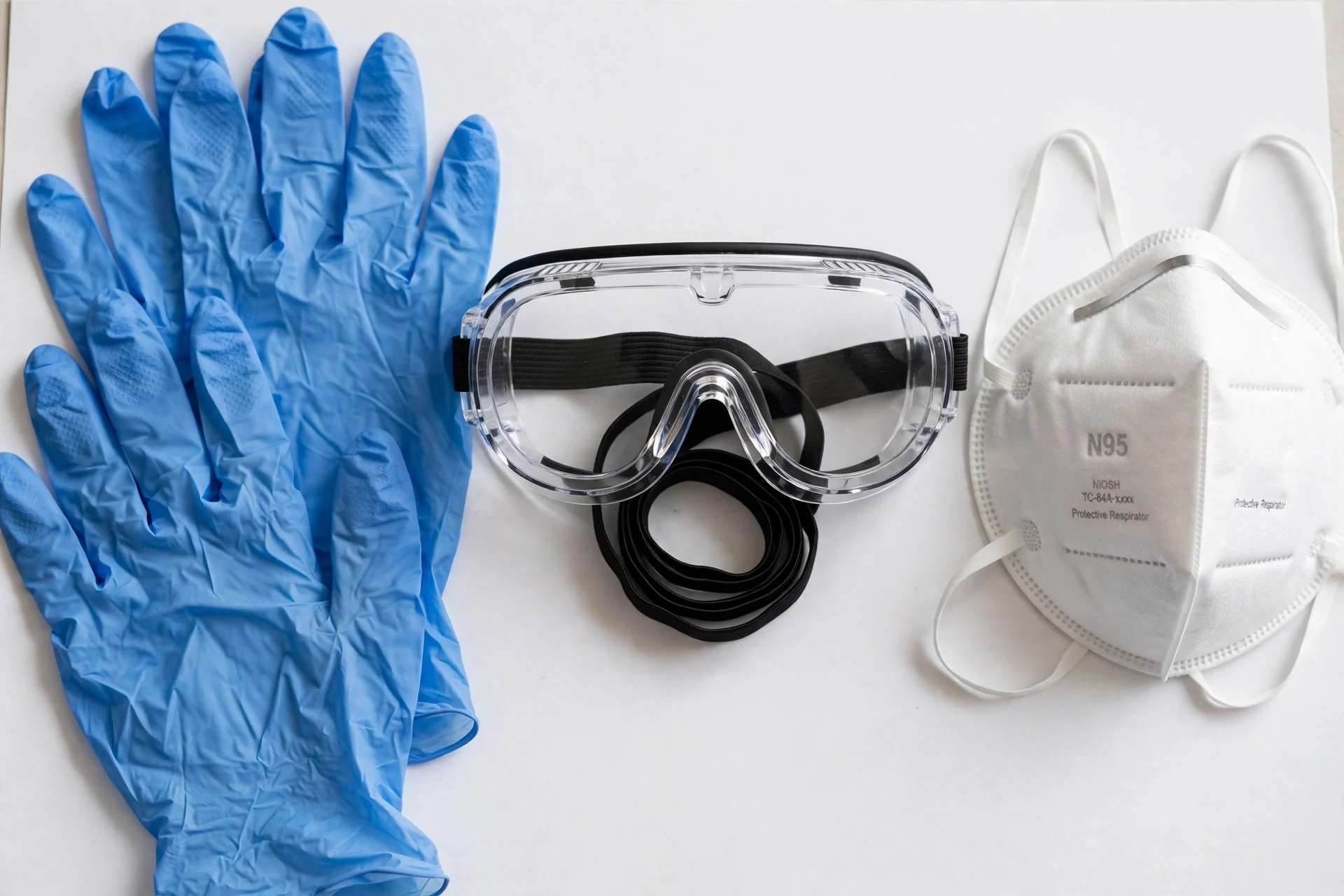
What cleanup actually involves
Professional remediation isn’t cleaning in the household sense. It’s a contamination-control sequence, and skipping steps is how odors and pathogens survive a “cleaned” room:
- Assessment.
Technicians map what was affected — and just as importantly, what wasn’t. Fluids travel: through carpet into padding, through mattresses into box springs, into subflooring. The assessment decides what gets cleaned and what gets removed.
- Containment.
The work area is sealed off so contaminants don’t migrate to clean rooms on boots, equipment, or air currents.
- Removal.
Porous materials that absorbed fluids — carpet, padding, mattresses, drywall sections — are cut out and bagged as biohazard waste. This is the step DIY efforts almost always underdo.
- Disinfection.
Remaining hard surfaces are treated with EPA-registered hospital-grade disinfectants at the required contact time — not sprayed and wiped in one pass.
- Deodorization.
Only after the source is gone. Ozone or hydroxyl treatments address residual odor in air and soft materials; neither replaces source removal.
- Waste disposal.
Everything removed leaves in labeled biohazard containers to a licensed medical-waste treatment facility — typically incineration. It cannot go in a household dumpster or a standard landfill.
The practical guides
Three questions come up in nearly every family situation. Each has its own complete guide below.
Who cleans up crime scenes?
The full answer to the most-asked question: why it’s never the police, what “biohazard remediation company” actually means, how the handoff from investigators works, and what qualifications to look for before hiring one.
Who pays for crime scene cleanup?
The money guide: insurance claims step-by-step, state victim-compensation programs and their caps, what to document from day one, and why multiple quotes matter in an industry with enormous price spreads.
Fingerprint dust: how to remove it
After investigators dust for prints, the fine black powder stays on everything they touched. Dry removal first, then a damp wipe — and what never to use on painted walls. Essentially no good guide to this exists anywhere else.
Common questions about crime scene cleanup
Do the police clean up crime scenes?
No. Police secure the scene, investigate, and collect evidence. Once they release the scene, cleanup becomes the property owner’s legal responsibility — there is no public cleanup service for private property.
Who pays for crime scene cleanup?
Usually the property owner’s homeowner’s or renter’s insurance, minus the deductible. Some states have victim-compensation programs that reimburse cleanup costs. When neither applies, the property owner pays out of pocket — which is when multiple quotes matter most.
How long does crime scene cleanup take?
Anywhere from a few hours for a contained scene to several days for severe contamination. What drives the timeline: how long the scene went undiscovered, how far fluids traveled into porous materials, and whether odor remediation is needed after source removal.
What happens to the waste from a crime scene?
It’s regulated biohazard waste. Removed materials leave in labeled containers to a licensed medical-waste treatment facility — typically incineration. It cannot legally go in a household dumpster or standard landfill.
Can I clean up a crime scene myself?
For a small blood spill, yes, with gloves and proper disinfectant — our blood safety guide draws the line. Anything beyond that — large volumes, unknown pathogens, odor, structural contamination — belongs to trained remediation technicians under OSHA’s Bloodborne Pathogens Standard.
How do you remove fingerprint dust after an investigation?
Dry removal first: a soft brush or a vacuum with a brush attachment lifts the powder without grinding it in. Then a damp (not wet) wipe on hard surfaces. Avoid abrasive cleaners on painted walls — they’ll take the paint with the dust. Our fingerprint dust guide covers each surface.
Sources
- OSHA Bloodborne Pathogens Standard, 29 CFR 1910.1030 — exposure control, PPE, and decontamination requirements for remediation work. osha.gov
- California Victim Compensation Board — crime-victim expense reimbursement programs (state programs and caps vary). victims.ca.gov
- EPA — registered disinfectant lists and medical-waste handling guidance. epa.gov
Cleanup sequencing and industry practice described here reflect standard biohazard remediation procedure; legal responsibility rules are general information — state and local rules vary.
Need to understand what professional cleanup involves?
Our legacy service guide explains how professional crime scene cleanup works — useful context whether you hire a company or just want to know what the quotes should cover.