Hydrogen Peroxide for Blood Stains: Does It Work?
Hydrogen peroxide is the single most-recommended blood-stain remedy on the internet — and the single most misunderstood one. It genuinely works, but only in the right situation, at the right strength, on the right fabric. Here is the honest version: what it does to blood, the protocol that works, and everything it can ruin.
If you are wondering does hydrogen peroxide remove blood, you probably have a stain that laughed at soap and water. Peroxide is the right next step — but only if you respect its limits. This guide explains what it actually does to blood, the protocol that works, the fabrics it damages, and when an enzymatic cleaner is the better choice.
Safety first: if the blood isn’t yours, put on disposable gloves before handling anything. Our blood cleanup safety guide explains when a stain is a laundry problem and when it isn’t.
What peroxide actually does to blood
Two things happen when hydrogen peroxide meets a blood stain, and understanding both explains everything else in this guide.
First, it oxidizes the hemoglobin. Hydrogen peroxide is a mild oxidizer. The brown-red color of a blood stain comes from hemoglobin, and oxidation breaks those pigment molecules apart — that is the stain visibly fading as you watch. This is why peroxide works best on dried blood: dried stains are hemoglobin that has bonded to the fibers, and oxidation is one of the few household chemistries that can break those bonds back down.
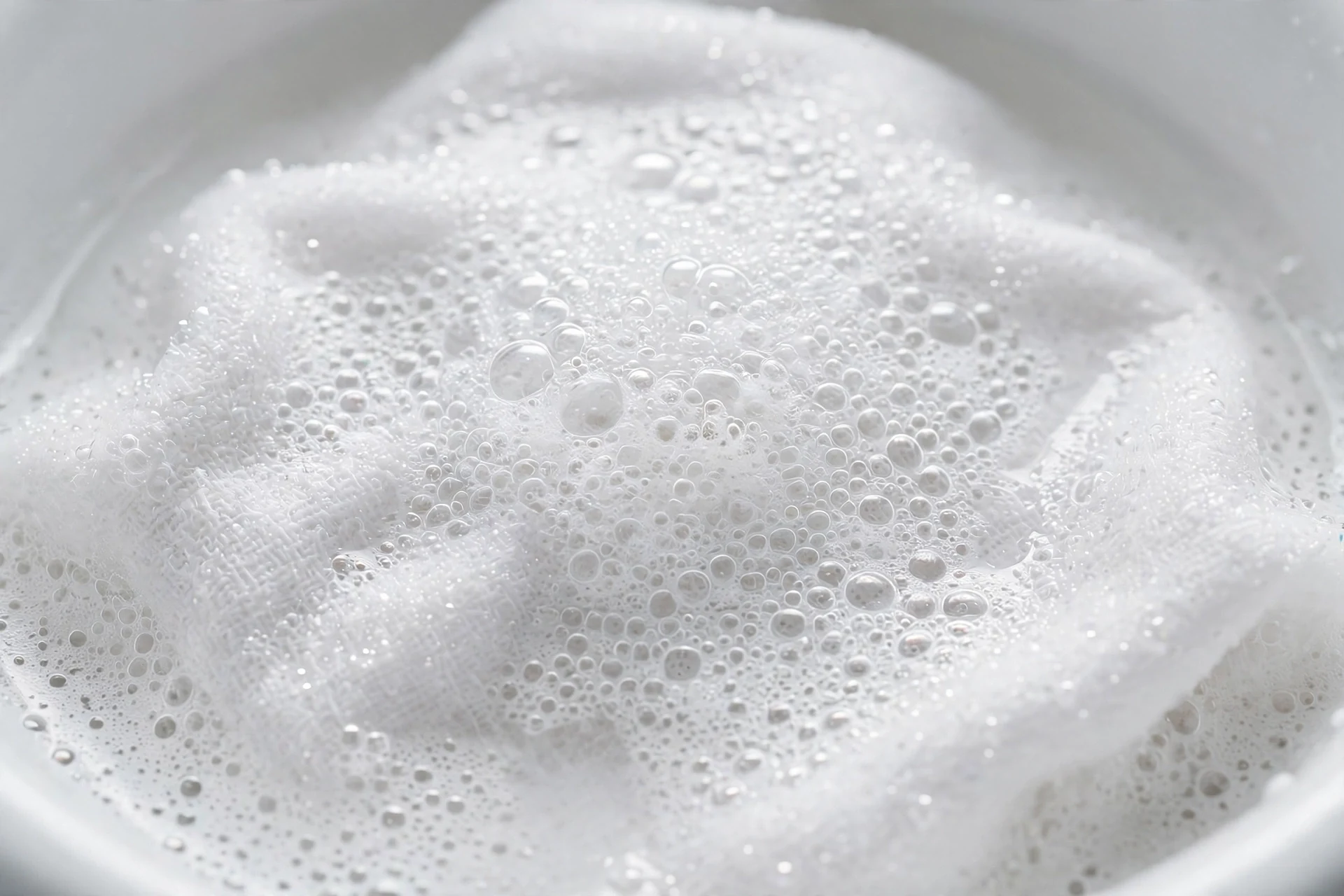
Second, it fizzes — and the fizz is useful, not just theatrical. Blood contains an enzyme called catalase, which instantly breaks hydrogen peroxide into water and oxygen gas. The bubbles you see are oxygen being released right inside the stain, and they physically lift loosened pigment out of the fibers so your blotting cloth can carry it away. No fizz after the first round usually means the blood that can be oxidized already has been — which tells you the peroxide has done its job and further rounds won’t help.
One consequence worth knowing: because peroxide attacks the pigment, it is also a mild bleach. That is a feature on white sheets and a hazard on colored ones. Which brings us to the rules.
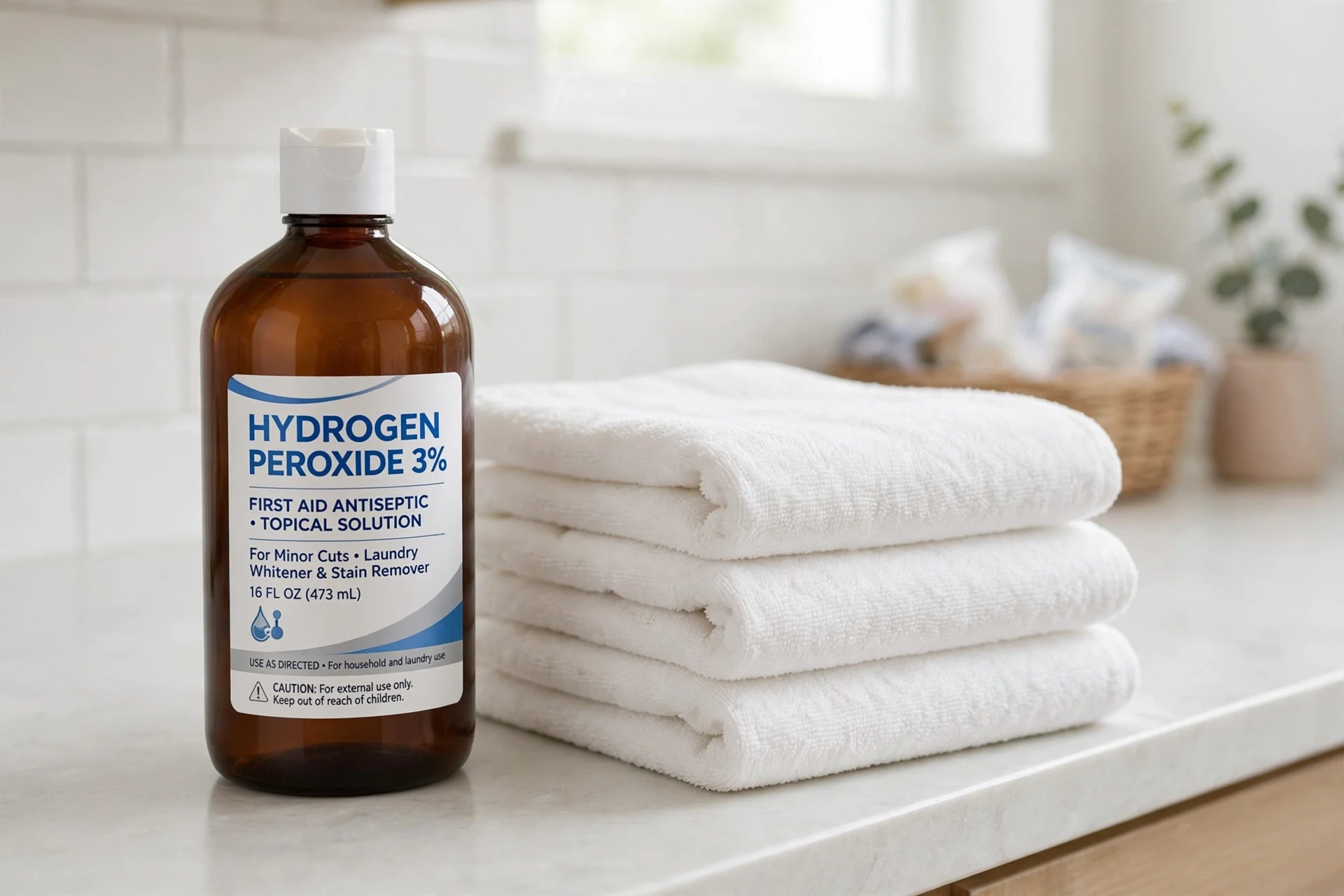
Use the right bottle: 3%, not “food grade”
The hydrogen peroxide in your medicine cabinet is a 3% solution — 97% water. That is the strength this entire guide is written for, and it is the strength every working method online uses.
You may see “35% food grade” peroxide sold for health purposes. Do not use it on stains. At 35%, hydrogen peroxide is a strong oxidizer that can burn skin, damage eyes, and chew through fabric — it is an industrial chemical, not a laundry upgrade. Stronger is not better here; 3% does the job.
Two storage facts that actually matter:
- Light kills it. That is why peroxide comes in a brown bottle. Leave it in sunlight or transfer it to a clear container and it quietly decomposes into plain water — then your “peroxide treatment” is literally watering the stain.
- It expires. An opened bottle kept a year or more may have lost most of its strength. If a fresh pour on a stain doesn’t fizz at all, the bottle is dead — buy a new one (it costs about a dollar).
The protocol that actually works
This is the method behind every successful “peroxide removed my blood stain” story — the steps in order, with the reasons:
- Rinse cold first, always. Hold the stained area under cold running water and gently work out everything loose. Peroxide is a second-line treatment: it works far better when it doesn’t have to chew through a thick layer of fresh blood. Never hot water — heat sets protein stains permanently.
- Dab, don’t drown. Pour or squeeze a small amount of 3% peroxide directly onto the stain. You want the stain saturated, not the garment swimming. For precision on a small stain, apply with a cotton ball or clean cloth.
- Let it bubble for 5–10 minutes. The fizzing is the chemistry working. On a dried stain you may need to re-wet with peroxide halfway through as the first round gets consumed. Don’t rush this step — this is where the pigment breaks down.
- Blot, don’t rub. Press a clean white cloth (white, so no dye transfers) into the stain to lift the loosened blood. Work from the outside edge inward so you don’t spread it. Rubbing grinds pigment deeper and frays fibers.
- Repeat 2–3 times. One round rarely finishes the job on dried blood. Rinse the area with cold water between rounds, reapply, and blot again. Judge the result after the third round, not the first.
- Launder cold, air-dry, inspect. Wash in cold water with your regular detergent, then air-dry and check in good daylight. If any mark remains, repeat the peroxide rounds — never put the garment in the dryer until the stain is completely gone, because dryer heat will set whatever is left permanently.
For a full walkthrough of the cold-first routine and what to do when the stain has already been through the dryer, see our master guide to getting blood out of clothes — this peroxide protocol slots into it as the dried-stain weapon.
The spot test (do this on anything colored)
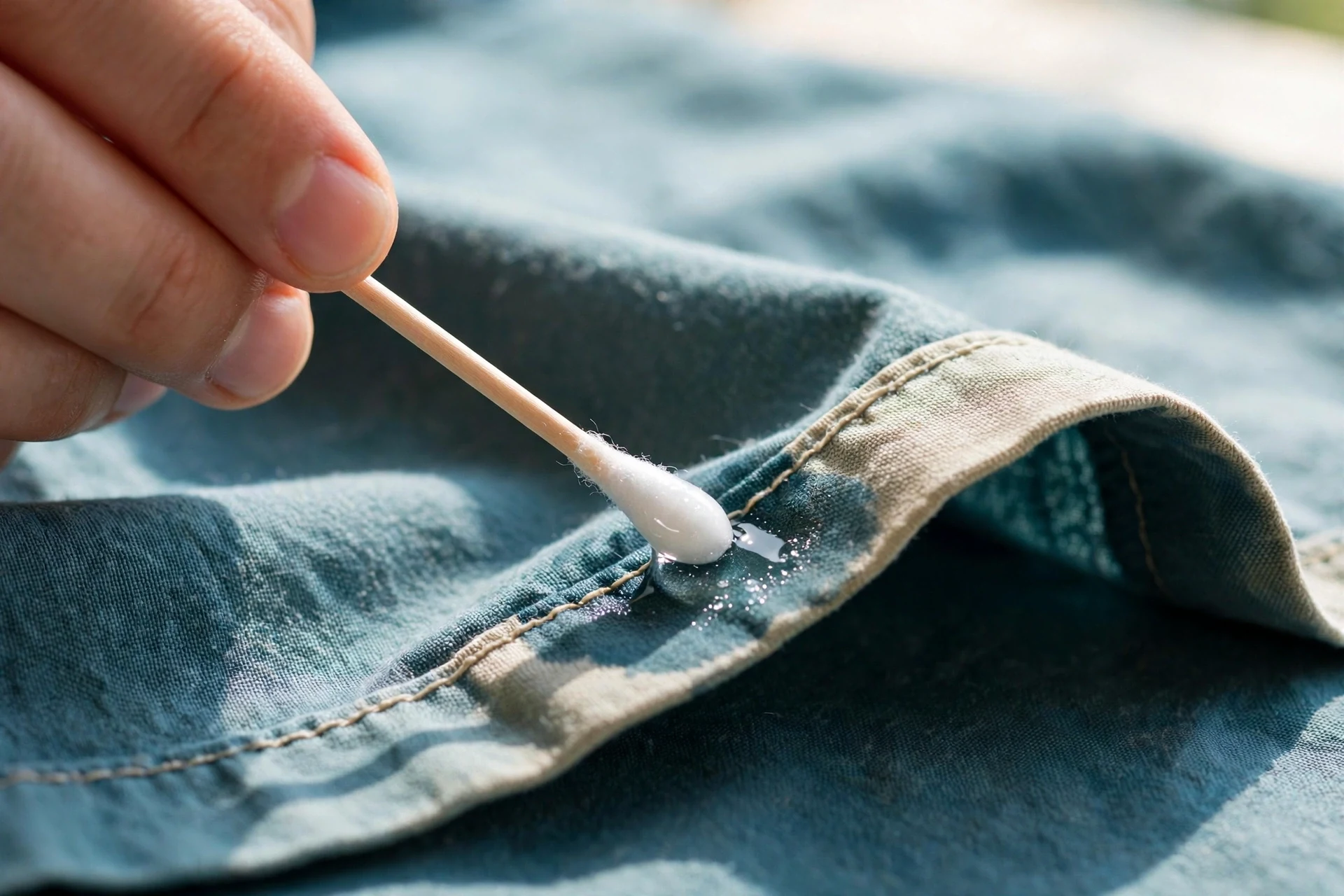
Hydrogen peroxide can bleach or fade colored fabrics. Not always, not on everything — but often enough that skipping the test is how “my stain is gone but my shirt has a light spot” happens. The test takes one minute:
- Dab a drop of 3% peroxide on a hidden area — an inside seam, the hem, or under a collar.
- Wait 10 minutes, then blot and check in good light.
- If the color is unchanged, proceed with the stain. If it lightened, use an enzymatic cleaner instead — enzymes break down blood protein without bleaching dye.
Dark denim, bright cotton prints, and anything dyed with unstable dyes are the usual victims. Whites and light colorfast fabrics are where peroxide is at its safest and most effective.
Fabrics peroxide should never touch
Beyond the bleaching risk on colored fabrics, there are materials where peroxide is simply the wrong tool:
- Wool, silk, and cashmere. These are protein fibers, and oxidizers weaken them. Peroxide can yellow wool and degrade silk — the enzyme-trap problem from our clothes guide applies to oxidizers too. Use cold water and a wool-safe detergent only.
- Leather and suede. Peroxide strips natural oils and discolors the finish. Blood on leather is a job for a leather cleaner, not a brown bottle.
- Anything labeled “dry clean only.” Water-based treatments can watermark the fabric. Take it to the cleaner and point out the stain.
On everything else — cotton, polyester, blends, sheets, towels, jeans — 3% peroxide is a reasonable treatment as long as the spot test passes.
Where peroxide shines — and where it doesn’t
Peroxide is a specialist, not a generalist. Here is where it belongs in your stain-removal arsenal:
Dried blood: peroxide’s home turf
This is the case it was made for. Dried blood has bonded to fibers, and oxidation is one of the only household methods that breaks those bonds. Rehydrate the stain with cold water and a drop of dish soap for 10–15 minutes first — peroxide works better on a damp stain than a bone-dry one.
Fresh blood: overkill
A fresh stain rinsed under cold water within minutes usually doesn’t need peroxide at all. Reaching for the brown bottle first on fresh blood wastes time; cold water plus dish soap does the job faster. Save peroxide for what’s left after rinsing.
Heat-set stains: worth one attempt
Blood that went through a hot wash or dryer is denatured protein — bonded far more tightly. Peroxide sometimes fades these and rarely removes them fully. Run the protocol once; if the stain barely moves, switch to a long cold enzyme soak instead of repeating peroxide endlessly.
Carpet, mattress, upholstery: use with caution
Peroxide works on these surfaces, but you can’t rinse them the way you rinse a shirt — residue stays behind, and the bleaching risk matters more when you can’t flip the fabric over. Dab sparingly, blot thoroughly, and consider whether an enzymatic cleaner is the safer pick for your material. Our sibling guides cover each surface in detail: carpet, mattress, and upholstery.
Peroxide vs. the alternatives — an honest comparison
No stain guide should pretend every method is equal. Here is how peroxide stacks up, ranked by situation:
Enzymatic cleaners
Best for: colored fabrics, delicate dyes, and large or soaked-through stains. Enzymes digest blood protein without bleaching — the safest all-rounder. Downside: slower (needs 30+ minutes of dwell time) and pricier per use than a dollar bottle of peroxide.
Oxygen bleach (sodium percarbonate)
Best for: whites and sturdy colorfast fabrics, especially as an overnight soak after spot treatment. Gentler than chlorine bleach, no dye-stripping. Downside: less targeted than dabbing peroxide directly on a stain.
Salt / dish soap / cold water
Best for: fresh stains — the first response. Cheap, always on hand, and often all you need if you catch the stain early. Downside: nearly useless on dried blood, which is exactly where peroxide takes over.
Chlorine bleach
Best for: white cotton only — and even there, oxygen bleach is gentler on fibers. Downside: destroys dye on anything colored and weakens fabric with repeated use. Peroxide is the safer oxidizer in almost every case.
The verdict: for dried blood on whites and colorfast fabrics, 3% peroxide is the best first chemical treatment — cheap, fast, and effective. For colored fabrics, reach past it to an enzymatic cleaner. For fresh blood, cold water wins before any product enters the picture.
What NOT to do
Pouring peroxide on before rinsing
Peroxide on a thick layer of fresh blood gets consumed breaking down blood you could have rinsed away for free. Cold water first, peroxide second — the order matters.
Using it on colored fabric without a spot test
The most common peroxide regret: the blood is gone, replaced by a pale bleached patch that is permanent. One minute of spot-testing a hidden seam prevents it.
Reaching for 35% “food grade” peroxide
At 35% this is a caustic chemical that burns skin and destroys fabric. It is not a stronger version of the same trick — it is a different, dangerous product.
Mixing peroxide with bleach
Never combine hydrogen peroxide with chlorine bleach — the mixture releases toxic gases and can damage fabric violently. Use one oxidizer per stain, not a cocktail.
Soaking for hours or scrubbing
Leaving peroxide on indefinitely doesn’t improve results — the reaction finishes in minutes, and prolonged exposure weakens fibers. Likewise, rubbing grinds pigment deeper; blot and repeat instead.
Machine-drying before the stain is fully gone
The dryer sets whatever remains into a permanent bond. Air-dry, inspect in good light, and treat again if needed — the rule applies to every stain-removal method.
Common questions about hydrogen peroxide and blood stains
Quick answers to the questions people ask most:
Does hydrogen peroxide remove old, dried blood?
Often, yes — dried blood is peroxide’s best case. Rehydrate the stain with cold water and a drop of dish soap for 10–15 minutes first, then apply 3% peroxide, let it bubble 5–10 minutes, blot, and repeat 2–3 times. It works on whites and colorfast fabrics; spot-test colored garments first.
Will hydrogen peroxide bleach my clothes?
It can. Hydrogen peroxide is a mild oxidizer, so on colored fabrics it may lighten or fade the dye — especially dark or unstable dyes. Always spot-test a hidden seam for 10 minutes before treating the visible stain. On whites, the bleaching action is a feature, not a bug.
How long should I leave hydrogen peroxide on a blood stain?
Five to ten minutes per round is the sweet spot — that is how long the active reaction takes. Leaving it on for hours doesn’t help and can weaken fibers. If one round isn’t enough, rinse, reapply, and repeat up to three times, judging the result between rounds.
Can I use hydrogen peroxide on colored clothes?
You can, but only after a spot test passes. Dab peroxide on a hidden area, wait 10 minutes, and check for fading. If the color holds, proceed carefully; if it lightens, switch to an enzymatic cleaner, which breaks down blood protein without touching dye.
Is food-grade (35%) hydrogen peroxide better for stains?
No — and it is dangerous. At 35%, hydrogen peroxide can burn skin, damage eyes, and destroy fabric. The 3% drugstore solution is the correct strength for stain removal; stronger does not mean better here.
Why does hydrogen peroxide bubble on blood?
Blood contains an enzyme called catalase that breaks hydrogen peroxide down into water and oxygen gas — the bubbles are oxygen being released inside the stain. The fizzing mechanically lifts loosened pigment out of the fibers, which is why the bubbling is part of how it cleans, not just a side show. If a fresh pour stops fizzing, the peroxide has done all it can.
Can I use hydrogen peroxide on blood-stained carpet or a mattress?
Yes, with caution. Dab 3% peroxide sparingly and blot thoroughly, because unlike a shirt you can’t rinse a carpet — residue stays behind. The bleaching risk matters more on surfaces you can’t flip over. For carpet especially, an enzymatic cleaner is often the safer pick; our carpet guide and mattress guide walk through both options per surface.
Sources
- Housewife How-Tos — blood stain removal guide: cold-water-first protocol and peroxide-on-whites guidance. housewifehowtos.com
- Her World — period-blood stain guidance: cold water first, peroxide on whites only. Referenced via our cluster research.
- Total Cleaning Services — mattress blood-stain protocol: peroxide plus dish soap and salt paste method. Referenced via our cluster research.
- CDC — Clinical Overview of Hepatitis B: dried blood can carry viable virus for days; handle unknown-source blood with gloves. Referenced via our blood safety cornerstone.
The chemistry described (hemoglobin oxidation by peroxide, catalase-driven decomposition, protein denaturation by heat, peroxide light-sensitivity) is standard textile and general chemistry knowledge. Household-safety guidance (never mix peroxide with chlorine bleach; do not use 35% peroxide on skin or fabric) reflects standard poison-control and product-label guidance.
Blood somewhere peroxide can’t fix?
Peroxide handles the stain on the fabric. But blood that soaked through to carpet padding, a mattress core, or upholstery foam is a different problem — sometimes cleanable, sometimes a replacement job. See what professional blood cleanup actually involves — and if you spot an error in this guide, let us know.