How to Get Blood Out of Clothes
Blood is a protein stain, which makes heat its best friend and your worst enemy. Below is every method that actually works — ranked honestly by stain age and fabric type — plus the mistakes that set the stain in forever.
If you are wondering how to get blood stains out of clothes, the answer depends on two things: how old the stain is, and what the fabric is. Get those two right and nearly every method below works; get them wrong and even the best products fail. This guide gives you the honest ranking no other stain guide bothers to make — what works best for each situation, and what is a waste of time.
One safety note before the laundry science: if the blood is not yours, put on disposable gloves before handling the garment. Our blood cleanup safety guide explains when DIY is fine and when a stain stops being a laundry problem.
Why blood stains behave differently
Blood is mostly a protein stain — hemoglobin and plasma proteins — and proteins have one defining quirk: heat permanently bonds them to fabric. Think of an egg white hitting a hot pan. The same denaturing happens when blood meets hot water or a hot dryer, which is why “never use hot water on blood” is not folk wisdom but chemistry.
Two more things shape your strategy:
- Fresh blood is mostly water-soluble. Catch it in the first minutes and plain cold water does most of the work — the proteins have not bonded to the fibers yet.
- Dried blood has oxidized. That brownish color is hemoglobin reacting with air. The stain is now bonded and needs a protein-breaking method — peroxide, enzymes, or a long soak — not just water.
- Blot, never rub. Rubbing grinds the stain deeper into the weave and frays fibers. Press and lift; let the chemistry do the work.
Every method, honestly ranked
Most stain guides list five to seven methods with no verdict — as if vinegar and hydrogen peroxide were equals. They are not. Here is each method ranked by what it is actually best for, based on how stain-removal chemistry works on protein stains:
1. Cold water + dish soap — the universal first step
Best for: fresh stains on every fabric. Verdict: always start here. Dish soap is a mild surfactant that lifts proteins before they bond. For a fresh stain treated within minutes, this alone often finishes the job.
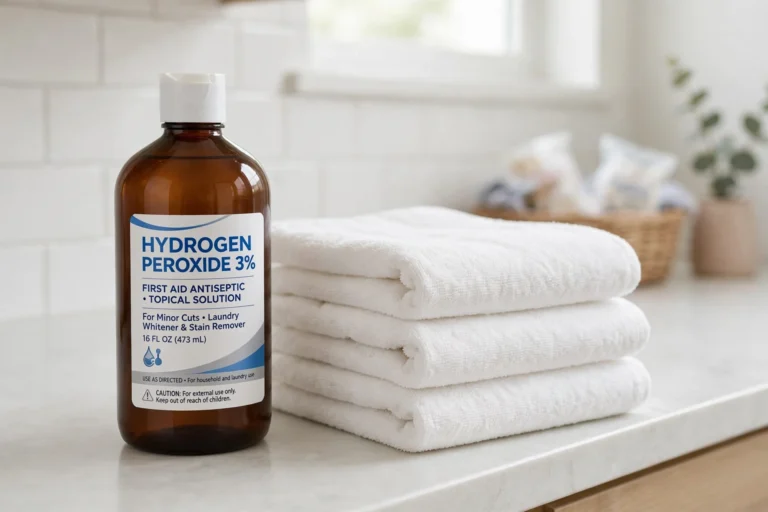
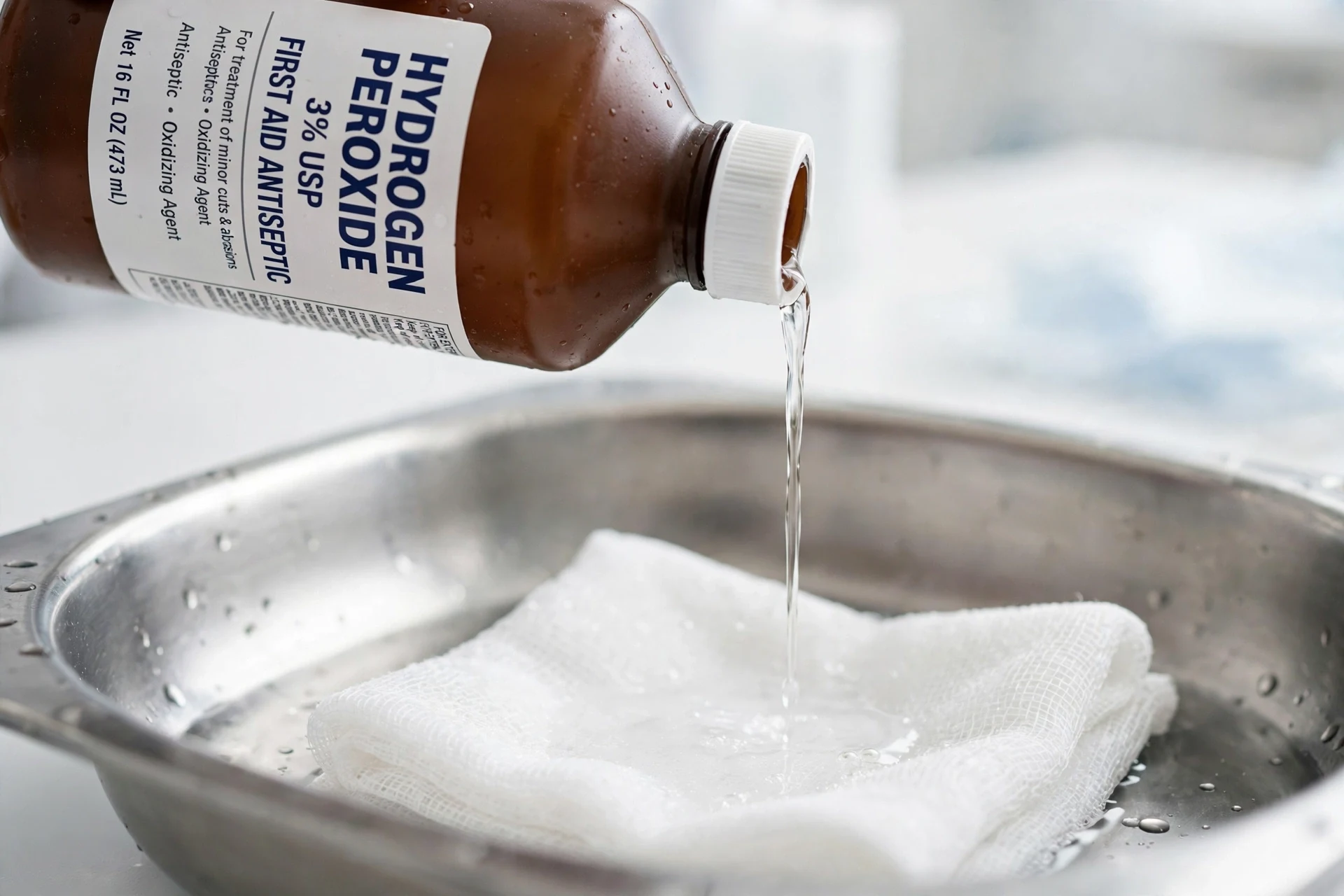
2. Hydrogen peroxide (3%) — the dried-blood specialist
Best for: dried and set-in stains on whites and colorfast fabrics. Verdict: the strongest option for old stains. It fizzes on contact with blood (that bubbling is the reaction working), breaking down the bonded proteins. Always spot-test colored fabrics in a hidden area first. Our dedicated peroxide guide covers concentrations and timing in detail.
3. Enzymatic cleaner — the protein dissolver
Best for: dried blood on washable cottons and synthetics. Verdict: excellent, with one hard rule. Protease enzymes digest protein stains the way your stomach digests food. Keep the fabric damp for 30 minutes or more so the enzymes can work. The hard rule: never use enzyme cleaners on wool, silk, or cashmere — the enzymes digest the fabric itself (see the delicates section below).
4. Salt paste or cold salt soak — the cheap first aid
Best for: fresh stains when you have nothing else. Verdict: surprisingly effective pre-treatment. Salt draws moisture — and dissolved blood — out of fabric. Make a paste with cold water, work it in gently, let it sit, then rinse cold. Also good as a cold salt-water soak for delicate items you do not want to scrub.
5. Oxygen bleach soak — the patient option
Best for: whites and most colorfast fabrics, especially larger stains. Verdict: the safest long soak. Sodium percarbonate (the active ingredient in OxiClean-type products) releases hydrogen peroxide slowly in water. Dissolve in cool water, soak for several hours or overnight, then wash cold. Test colors first — it is gentler than chlorine bleach but not risk-free on every dye.
6. Diluted ammonia — the heavy hitter
Best for: stubborn old stains on whites and sturdy colorfast cottons. Verdict: strong, use with care. About one tablespoon of household ammonia per cup of cold water, dabbed on and blotted — ventilate the room, wear gloves, and never mix ammonia with bleach or any other cleaner. This is a last-resort method, not a first step.
7. Meat tenderizer — the folk remedy with real chemistry
Best for: dried spots when nothing else is on hand. Verdict: works, but fussy. Unseasoned meat tenderizer contains papain, an enzyme that breaks down protein. Make a paste with cold water, keep the stain damp for 30+ minutes, then rinse. It is the same enzyme principle as method 3, just less convenient — and the same wool/silk warning applies.
What we deliberately left off the list: white vinegar is largely useless on blood despite its reputation in stain folklore, and toothpaste tends to leave its own residue in the fabric. Skip both. For a full side-by-side of these approaches, see our blood stain removal methods compared flagship guide.
Fresh blood: step-by-step
Time is the whole game with fresh blood. A stain treated in the first few minutes is dramatically easier than the same stain an hour later.
- Keep it cold — immediately.
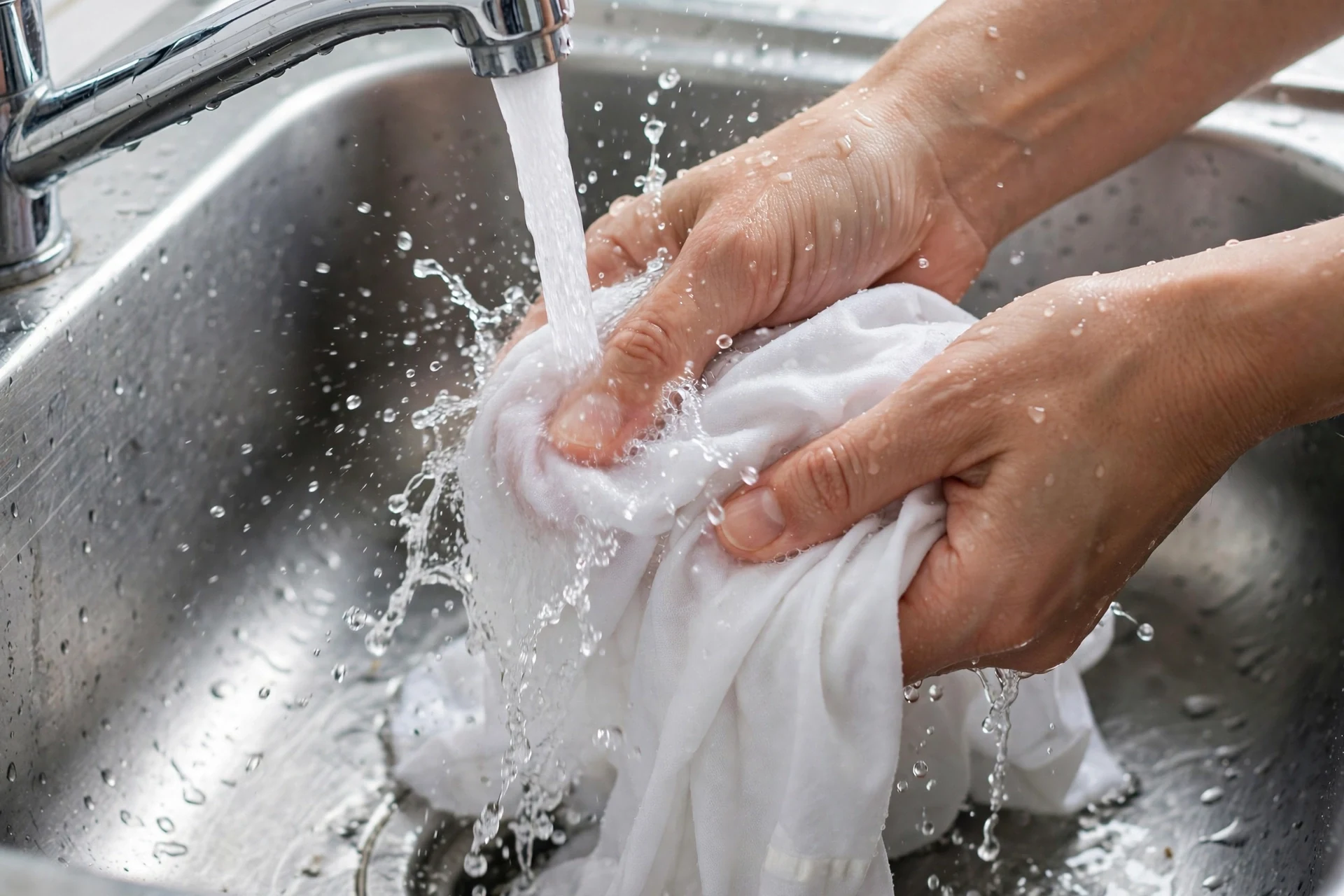
Get the garment under cold running water as fast as you can, with the water hitting the back of the stain so it pushes the blood out of the fabric rather than deeper in. If you cannot rinse right away, blot with a damp cold cloth and keep the stain damp until you can.
- Work in dish soap.
Apply a small amount of plain dish soap directly to the stain and gently work it in with your fingers. Let it sit 10–15 minutes. For a stubborn spot, make a paste of table salt and cold water and work that in instead — then rinse cold.
- Rinse and check.
Rinse thoroughly with cold water. If any shadow of the stain remains, repeat the soap step once more rather than escalating to stronger chemicals — fresh stains rarely need them.
- Machine wash cold.
Wash on a cold cycle with your regular detergent. Do not use warm or hot water.
- Air-dry and inspect.
Do not put the garment in the dryer until you have confirmed the stain is completely gone in good light. If a faint mark remains, treat it as a dried stain (next section) instead.
Dried and set-in blood: step-by-step
Dried blood needs the stain rehydrated before anything else can work — dry chemicals on a dry stain mostly sit on the surface. This is the step most guides skip.
- Rehydrate first.
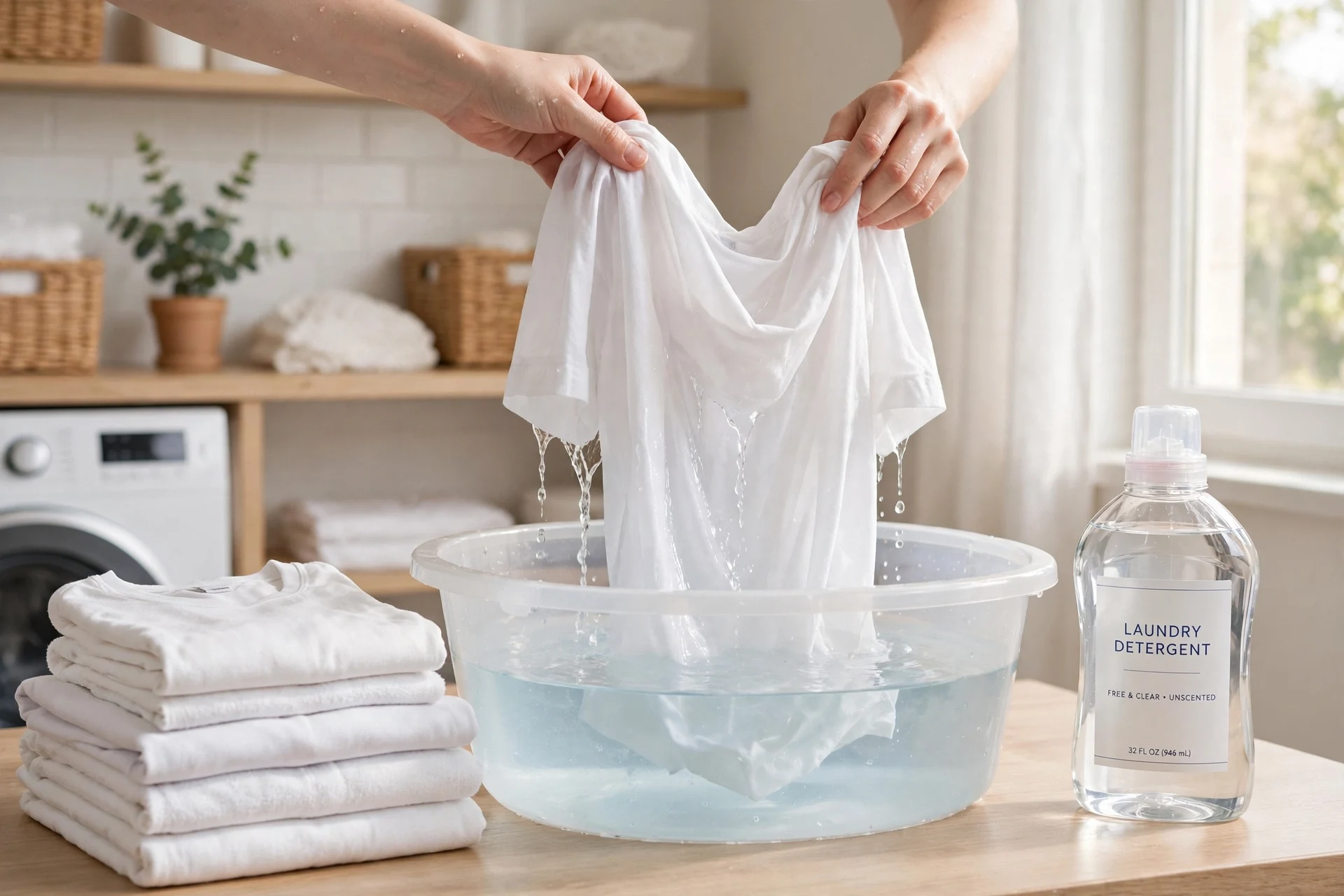
Soak the stained area in cold water with a squirt of dish soap for 10–15 minutes. Gently work the fabric to loosen the crust. For a large or very old stain, extend the soak to an hour, keeping the water cold.
- Apply hydrogen peroxide (3%).
Pour or dab 3% hydrogen peroxide directly onto the stain. It will bubble and fizz — that is the reaction breaking down the blood proteins. Let it work 5–10 minutes, blot with a clean cloth, and repeat. Two to three rounds handles most dried stains. Spot-test colored fabrics first in a hidden seam or hem.
- Or use an enzymatic cleaner.
If you prefer not to use peroxide (or the fabric is colored and the spot test failed), apply an enzymatic laundry pre-treater, keep the fabric damp for 30 minutes to a few hours, then rinse cold. Remember: never on wool or silk.
- Wash cold, check, repeat.
Machine wash on cold. Inspect in good light before drying — dried stains often need a second treatment round. Patience beats stronger chemicals here.
For stains on surfaces that cannot go in the wash, the same chemistry applies with different technique — see our guides for carpet, mattresses, sheets, upholstery, and concrete.
Whites vs. colored clothes
White clothes
- Hydrogen peroxide (3%) is your best first treatment — safe on whites, no spot test needed
- Oxygen bleach soak (several hours or overnight in cool water) for larger or older stains
- Chlorine bleach as a last resort only — it removes the stain but weakens cotton fibers and can yellow them over time; dilute it and never mix with anything else
- Wash cold or warm (not hot) after treatment; confirm the stain is gone before drying
Colored clothes
- Never use chlorine bleach — it strips dye and leaves a light spot worse than the stain
- Spot-test peroxide first in a hidden area; 3% peroxide is safe on most colorfast fabrics but can fade unstable dyes
- Enzymatic cleaners are usually the safest strong option for colors (except wool/silk — see below)
- Oxygen bleach is marketed as color-safe, but test first — “color-safe” is a claim, not a guarantee
- When in doubt, stick to cold water + dish soap + salt and accept a slower result
Wool, silk, and delicates: the enzyme trap
Here is the counterintuitive warning that earns this section its own heading: enzyme-based stain removers are among the best blood-stain weapons — except on wool, silk, and cashmere, where they attack the fabric itself. Wool and silk are protein fibers, and protease enzymes cannot tell the difference between the blood protein you want gone and the fabric protein you want to keep. The result is thinning, holes, or a ruined garment.
For delicates, use the gentle protocol:
- Cold water only, immediately.
Rinse or soak in cold water. No hot water, ever — heat felts wool and weakens silk.
- Press and lift with mild detergent.
Use a gentle, enzyme-free detergent. Press the solution into the stain and lift — never rub or wring, which distorts delicate weaves.
- Salt-water soak for stubborn spots.
A cold salt-water soak (a few tablespoons of salt per quart of cold water) for 30 minutes can draw out a fresh stain without any chemistry risk.
- Dry flat, away from heat.
Reshape and dry flat. If the stain persists on an expensive or sentimental piece, take it to a dry cleaner and tell them it is blood — professionals have protein solvents you cannot buy retail.
Period stains
Period blood follows the same rules as any blood stain, with one practical difference: it is usually discovered after it has dried. Cold water first is the entire game — run cold water through the fabric before anything else, since hot water will set a period stain almost instantly.
- Underwear and sheets: soak in cold salt water for 30 minutes, then treat with dish soap or an enzymatic cleaner and wash cold.
- Whites: 3% hydrogen peroxide is the fastest option — apply, let it bubble 5–10 minutes, blot, repeat.
- Colors: stick to the cold soak + enzyme cleaner route, with a peroxide spot test if you want to escalate.
- Do not let it sit. A period stain rinsed within the hour is a non-event; the same stain left overnight becomes a project.
For a deeper dive — including mattress and sheet techniques specific to overnight leaks — see our dedicated guide: how to get period blood out of clothes and sheets.
The dryer already ran: the rescue protocol
You washed the shirt, missed the stain, and ran the dryer. The stain is now heat-set — and nearly every guide online tells you it is permanent. That is overstated. Heat-set blood is harder to remove, not always impossible; you can often fade it dramatically even if a faint shadow remains.
- Rehydrate with an enzyme soak.
Soak the garment in cold water with an enzymatic cleaner for several hours (overnight for bad cases), keeping the stain damp the whole time. Enzymes need sustained contact to break heat-bonded protein.
- Run peroxide rounds.
Apply 3% hydrogen peroxide, let it bubble 5–10 minutes, blot, and repeat 3–4 times. On whites you can be aggressive; on colors, spot-test and go gently.
- Oxygen bleach overnight.
Dissolve oxygen bleach in cool water and soak overnight, then wash cold.
- Repeat the cycle before giving up.
One full cycle (enzyme soak → peroxide rounds → oxygen soak → cold wash) often needs repeating twice. Check in daylight between rounds and air-dry only — every dryer trip re-sets what you just loosened.
Honest expectations: a heat-set stain on sturdy white cotton has the best rescue odds; a heat-set stain on a delicate colored fabric may only fade. If the garment matters, stop while you are ahead rather than risking fabric damage with ever-stronger treatments.
What NOT to do
Using hot water at any stage
Hot water denatures blood protein and bonds it to fibers — the stain equivalent of cooking it in. Every rinse, soak, and wash in this guide is cold for a reason.
Machine-drying before the stain is fully gone
The dryer is where removable stains become permanent. Always air-dry and inspect in good light first; if any mark remains, treat again.
Chlorine bleach on colored clothes
It will strip the dye and leave a bleached spot that is worse than the blood stain. Bleach belongs on whites only — and even there, oxygen bleach is gentler.
Enzyme cleaner on wool or silk
Protease enzymes digest protein fibers. On wool, silk, or cashmere, the “stain remover” becomes the fabric destroyer. Use enzyme-free methods on animal fibers, always.
Scrubbing the stain
Rubbing grinds blood deeper into the weave and damages fibers. Blot and press, let the chemistry work, and repeat — friction is not a stain-removal method.
Common questions about getting blood out of clothes
Quick answers to the questions people ask most:
Does blood come out of clothes?
Yes, in most cases. Fresh blood treated with cold water within minutes almost always comes out completely. Dried blood usually comes out with hydrogen peroxide or an enzymatic cleaner. The exception is blood that has been through a hot wash or dryer cycle — heat-set stains are much harder and sometimes only fade rather than disappear.
How do I get blood stains out of clothes after they have been washed?
First, do not put the garment in the dryer — or if you already did, follow the rescue protocol above: a long cold enzyme soak, several rounds of 3% hydrogen peroxide, then an overnight oxygen-bleach soak, washing cold between rounds. Expect to repeat the cycle twice before judging the result.
Does hydrogen peroxide remove old, dried blood?
Often, yes. Apply 3% hydrogen peroxide directly to the rehydrated stain, let it bubble for 5–10 minutes, blot with a clean cloth, and repeat two to three times. It works on whites and most colorfast fabrics — spot-test colored garments in a hidden area first, since peroxide can fade unstable dyes.
Can I use bleach to get blood out of clothes?
Chlorine bleach works on white clothes only, and even there it weakens fibers over time — oxygen bleach (sodium percarbonate) is the gentler choice for whites. Never use chlorine bleach on colored clothes; it strips dye and leaves a permanent light spot.
What gets blood out of clothes the fastest?
Cold running water plus dish soap, applied within minutes of the stain happening. Speed matters more than product choice: a fresh stain rinsed immediately is easier than a day-old stain treated with the best chemicals on the shelf.
Is it safe to wash bloody clothes with my other laundry?
Your own blood from a minor cut or nosebleed: rinse the garment in cold water first, then wash cold with your regular load — normal laundering handles it. If the blood is someone else’s or from an unknown source, handle the garment with gloves, wash it separately, and read our blood cleanup safety guide before deciding whether it is a laundry problem or a job for professionals.
Why did my blood stain turn brown? Is it permanent?
Brown is just hemoglobin oxidizing in air — it means the stain dried, not that it is permanent. Dried brown stains respond well to the rehydrate-then-peroxide method above. Color is a clue about age, not a verdict on removability.
Sources
- CDC — Clinical Overview of Hepatitis B: hepatitis B virus can survive on surfaces for at least 7 days; dried blood should be treated with the same precautions as fresh blood. Referenced via our blood safety cornerstone.
The methods above — cold-water-first protocol, 3% hydrogen peroxide treatment, enzymatic cleaners, salt paste, and dish soap — reflect standard textile-care practice. The wool/silk enzyme warning follows from basic protein chemistry: protease enzymes digest protein fibers, which is exactly what wool and silk are. Contact times and dilutions should always follow the product label.
Blood somewhere the washing machine can’t reach?
Clothes are the easy case. Blood in carpet padding, a mattress, or upholstery foam is a different problem — sometimes a cleaning problem, sometimes a replacement problem. Read what professional blood cleanup actually involves — and if you spot an error in this guide or want a topic covered, let us know.