The Sewage Backup Cleanup Guide: What to Do, Who to Call, What’s Covered
The Sewage Backup Cleanup Guide: What to Do, Who to Call, What’s Covered
It’s 2 a.m. and the basement drain is bubbling. First: stop using water anywhere in the house. Then follow the order below — plumber, insurance, cleanup — because doing it in the wrong sequence is how a $3,000 problem becomes a $30,000 one.
- First move: stop all water use in the house — every flush and every load of laundry makes it worse.
- Call a plumber before your insurer. The plumber’s finding (your lateral vs. the city main) decides who pays for what.
- Standard homeowner’s policies exclude sewage backup. The typical endorsement caps at about $5,000 — a fraction of a finished-basement cleanup.
- Never enter sewage water without full PPE, and never run an HVAC system that’s been in contact with it.
Sewage backup sits in an odd blind spot: it’s one of the most common household disasters and one of the least understood. People call the wrong party first, assume insurance covers what it doesn’t, and underestimate the health risk because the water “doesn’t look that bad.” Every section below exists to prevent one of those three mistakes.
The first 30 minutes: do this in order
- Stop all water use.
No flushing, no laundry, no showers, no dishwasher. Every gallon you send down adds to the backup.
- Keep people and pets out.
Sewage carries bacteria, viruses, and parasites. Children, elderly family members, and pets stay completely clear of the affected area.
- Shut off power to the area if water is near outlets.
Water plus electricity is the fastest way a bad night gets worse. If you’re unsure, kill the breaker for that zone.
- Don’t touch the water without PPE.
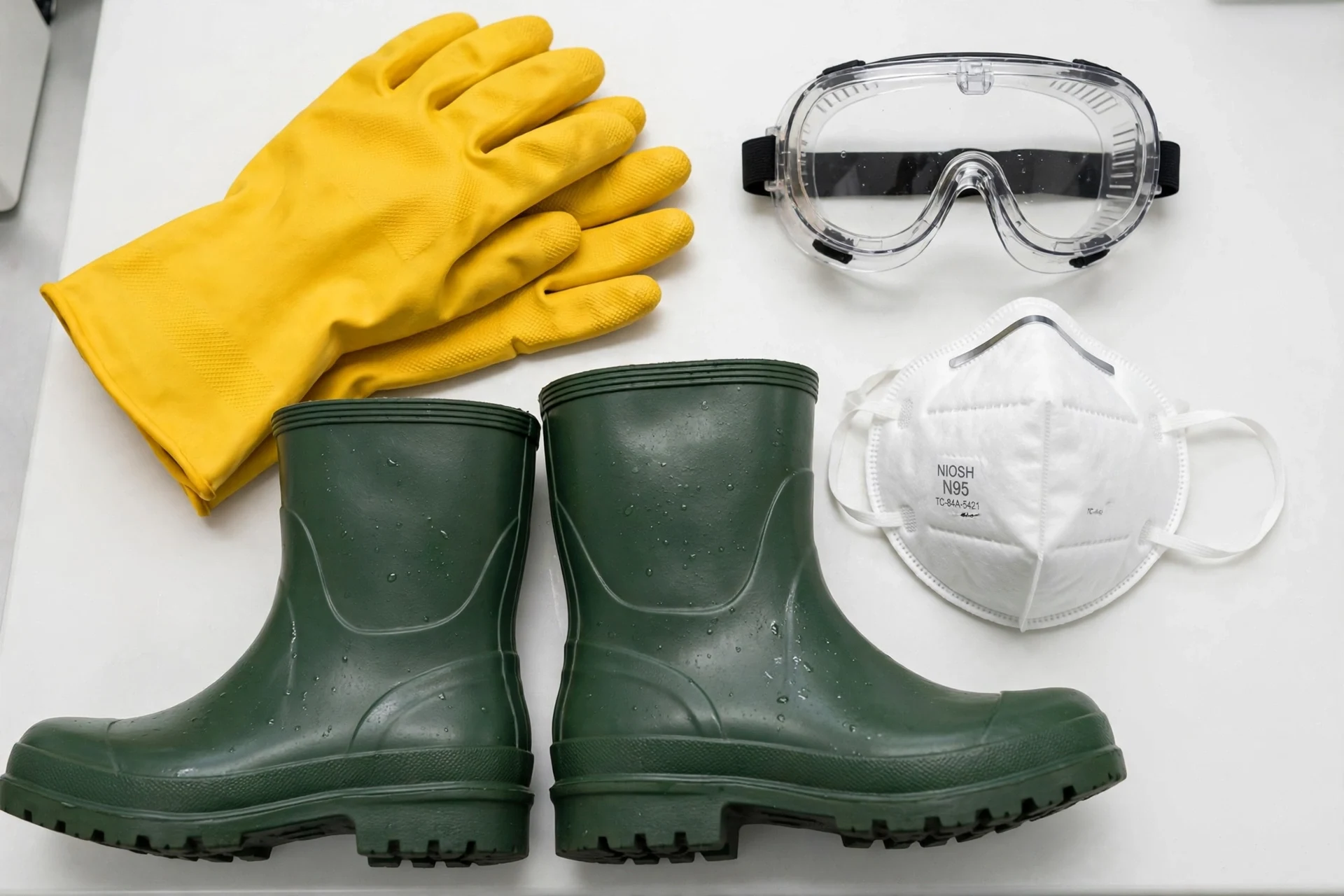
If you must enter — to shut a valve, to photograph damage for insurance — wear rubber boots, heavy-duty gloves, goggles, and an N95 respirator. No bare skin, no exceptions.
- Photograph everything before cleanup starts.
Wide shots and close-ups, water lines on walls, damaged belongings. Your insurer will want this, and you can’t recreate it after the mess is gone.
Who to call, and in what order
The order matters because each call answers a question the next one needs:
- A plumber — first.
The plumber determines where the blockage is: your private lateral (your problem and your bill) or the municipal main (the city’s responsibility). Until you know which, nobody else can tell you what happens next.
- Your insurer — second.
Report the loss and ask two questions: do I have a water-backup endorsement, and what is its limit? Standard policies exclude sewage backup — if you never added the endorsement, find out now rather than after paying for cleanup.
- A cleanup company — third, if the job is beyond mopping.
Anything beyond a small, contained backup on a hard surface belongs to professionals with extraction equipment and proper disinfection protocols. Get the plumber’s all-clear on the cause first, or you’ll clean up just in time for it to happen again.
One thing that surprises homeowners: the city almost never pays for your damage. You own the private lateral from your house to the main; the city is responsible only for the public main itself. Our full cleanup guide walks through the whole sequence in detail.
Why the health risk is real
Raw sewage is a cocktail of everything a neighborhood flushes: E. coli and other bacteria, norovirus, hepatitis A, parasites, and whatever chemicals went down drains that week. The restoration industry classifies it as Category 3 water — grossly unsanitary, in the same class as floodwater from rivers and seas.
Two rules most people get wrong: don’t use the HVAC system if sewage reached ductwork or the furnace area — it will aerosolize contaminants through the whole house. And porous materials don’t get cleaned, they get removed — carpet padding, soaked drywall, and upholstered items that sat in sewage are disposal items, not cleaning projects. Our health-risks guide covers symptoms, exposure routes, and the PPE list in full.
What it costs — and the insurance trap
Cleanup costs scale with area and materials: a small contained backup on a concrete floor runs in the low thousands; a finished basement with soaked drywall, carpet, and contents runs into the tens of thousands. What drives the number: square footage affected, whether drywall and flooring must be removed, and how long the sewage sat before extraction.
Here’s the trap: the standard water-backup endorsement caps around $5,000 — and most homeowners who have the endorsement carry exactly that default. $5,000 covers a minor incident. It covers a fraction of a finished basement. Read your declarations page before you need it, and ask your agent what higher limits cost — it’s usually a small premium bump for a much bigger safety net. Our cost guide breaks down the ranges and the drivers; our insurance coverage guide covers how biohazard claims work more broadly.
Preventing the next one
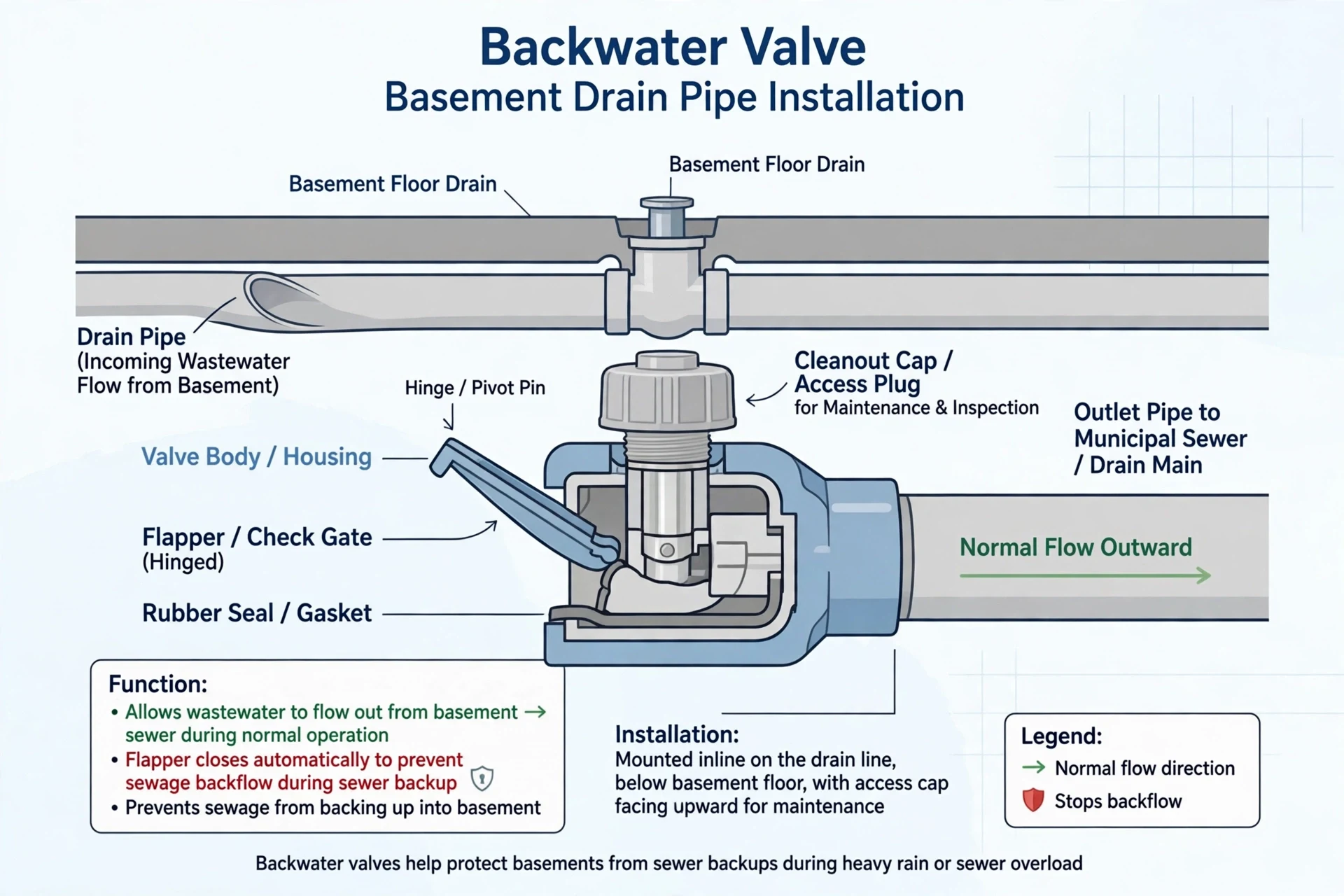
The single most effective prevention device is a backwater valve — a one-way valve on your lateral that lets sewage flow out but slams shut when the main tries to push it back in. Many municipalities require them in flood-prone areas; even where they don’t, it’s the cheapest insurance against a repeat. Other basics: never flush wipes (even “flushable” ones), grease, or feminine products; know where your cleanout access is before an emergency; and if your basement drain gurgles when you do laundry, get the lateral camera-inspected — gurgling is an early warning, not a quirk.
The in-depth guides
Four guides, one per question that actually matters. Start with whichever matches your situation right now.
Sewage backup cleanup: the homeowner’s guide
The complete walkthrough: emergency steps, the plumber-insurance-cleanup call order, what gets removed vs. disinfected, and the drying protocol that prevents a mold problem from replacing the sewage problem.
Sewage in the basement: what to do first
The emergency-framed version for right now: power, water shutoff, PPE minimums, what to photograph, and the three calls to make before the sun comes up.
Sewage backup cleanup cost
Honest ranges, not quotes: what drives a $3,000 job vs. a $30,000 one, where the money actually goes, and the questions that get you an accurate estimate instead of a guess.
Sewage backup health risks
What’s actually in the water, how exposure happens (it’s the aerosols, not just the puddle), symptoms to watch for, and the full PPE and decontamination protocol.
Common questions about sewage backup
Does homeowners insurance cover sewage backup?
Standard policies exclude it. You need a separate water-backup endorsement, and the typical default limit is about $5,000 — check your declarations page and ask your agent about higher limits before you need them.
Can I clean up sewage myself?
A small, contained backup on a hard surface: yes, with full PPE (boots, gloves, goggles, N95) and proper disinfection afterward. Anything larger, anything involving carpet or drywall, or any HVAC contact: hire professionals with extraction equipment.
Who do I call first for a sewage backup?
A plumber. They determine whether the blockage is in your private lateral or the city main — and that finding decides who pays for what. Call your insurer second, with the plumber’s answer in hand.
Will the city pay for sewage backup damage?
Almost never. You own the private lateral from your house to the street main; the city is responsible only for the public main itself. If the plumber finds the blockage on your side, the bill is yours (or your insurer’s).
Is sewage backup dangerous to my health?
Yes. Raw sewage carries bacteria, viruses, and parasites, and the restoration industry classifies it as Category 3 “black” water — the most contaminated class. Keep people and pets out, wear full PPE for any entry, and never run HVAC that’s been in contact with it.
How much does sewage backup cleanup cost?
A small contained incident runs in the low thousands; a finished basement with removed drywall, flooring, and contents runs into the tens of thousands. Drivers: area affected, materials removed vs. disinfected, and how long the sewage sat before extraction.
Sources
- EPA — septic system and sewage handling guidance for homeowners. epa.gov/septic
- CDC — guidance on sewage exposure, sanitation, and waterborne illness prevention. cdc.gov
- IICRC S500 Standard — water-damage restoration standard defining Category 3 (“black”) water and remediation protocols.
Insurance coverage descriptions are general information about typical US homeowner’s policies — your policy’s actual terms control. Plumbing and building-code notes vary by municipality; check local rules.
Dealing with a backup right now?
Start with the emergency guide — the first-30-minutes sequence, the three calls in order, and exactly what to photograph for your insurer.