Biohazard Basics: What Counts, What’s Dangerous, How to Stay Safe
Biohazard Basics: What Counts, What’s Dangerous, How to Stay Safe
“Biohazard” gets thrown around loosely — on cleaning products, in crime shows, in landlord disputes. Here’s the precise version: what legally counts as a biohazard, which pathogens actually survive on surfaces, and the handful of rules that keep you safe.
- Dried blood still counts as a biohazard — hepatitis B can survive in dried blood for at least 7 days.
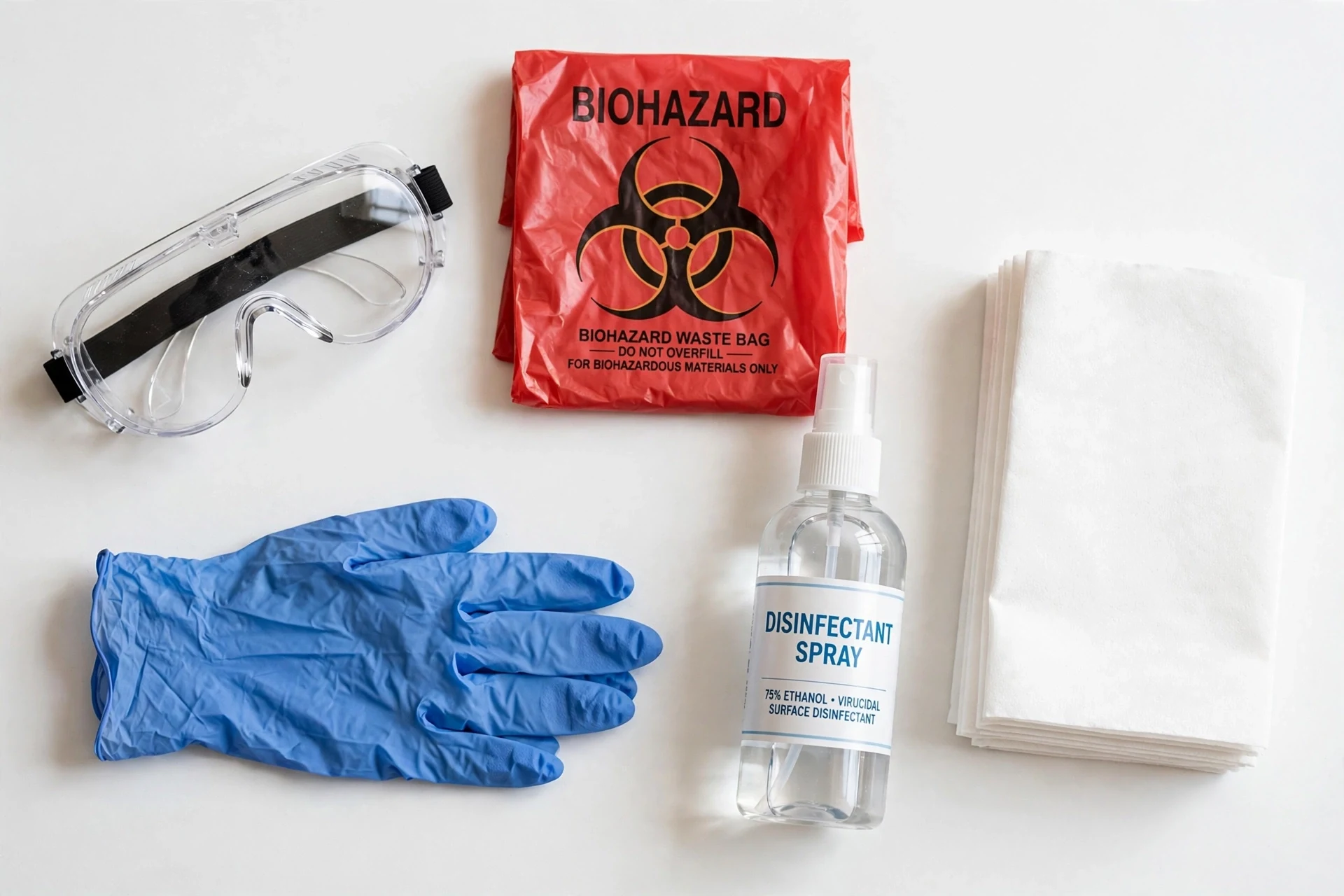
- Gloves first, always. Universal precautions mean treating every blood spill as if it were infectious.
- Disinfectants only work with the right contact time — spraying and immediately wiping is theater, not disinfection.
- When in doubt about scale or source, stop and read the safety guides below before deciding it’s a DIY job.
Most people meet the word “biohazard” in one of two moments: a landlord waving it around during a dispute, or a red bag at a doctor’s office. Neither tells you what it actually means. The working definition comes from occupational safety law, and it’s narrower — and more useful — than the scary version. Once you know what counts, what the real risks are, and the five rules that cover nearly every situation, the topic stops being intimidating and starts being manageable.
What actually counts as a biohazard
Under OSHA’s bloodborne pathogens standard, the regulated materials are: human blood and blood products, bodily fluids visibly contaminated with blood, and sharps (needles, broken glass) contaminated with blood. Medical and infectious waste — cultures, used bandages from an infected wound, pathological waste — falls under the same umbrella via state medical-waste rules.
What does not automatically count: a nosebleed on your own bathroom tile, a scraped knee, normal household trash. The line isn’t the substance — it’s the infection risk combined with exposure. Your own blood on your own skin is a laundry problem. Someone else’s blood on a shared surface, or any blood in volume, crosses into biohazard territory. Our full definition guide walks through the edge cases — animal waste, mold, sewage — one by one.
The three pathogens that matter
When safety guidance says “bloodborne pathogens,” it almost always means these three. They behave very differently, and knowing the difference is what separates sensible caution from fear.
| Pathogen | Survival on surfaces | What it means for you |
|---|---|---|
| Hepatitis B (HBV) | At least 7 days in dried blood (CDC) | The toughest of the three — this is why dried blood still counts as a biohazard |
| Hepatitis C (HCV) | Up to several days outside the body | Gloves and disinfection still required; risk drops sharply with proper cleanup |
| HIV | Minutes to hours; no documented transmission from dried blood or environmental surfaces (CDC) | Fragile outside the body — but universal precautions still apply regardless |
Notice the pattern: the risk is real but specific. “All dried blood is extremely dangerous” is vendor marketing; “dried blood is harmless” is equally wrong. The CDC’s per-act transmission data is the calibration point — our dried blood risk guide lays out the myth-vs-data version in full.
Five rules that cover nearly every situation
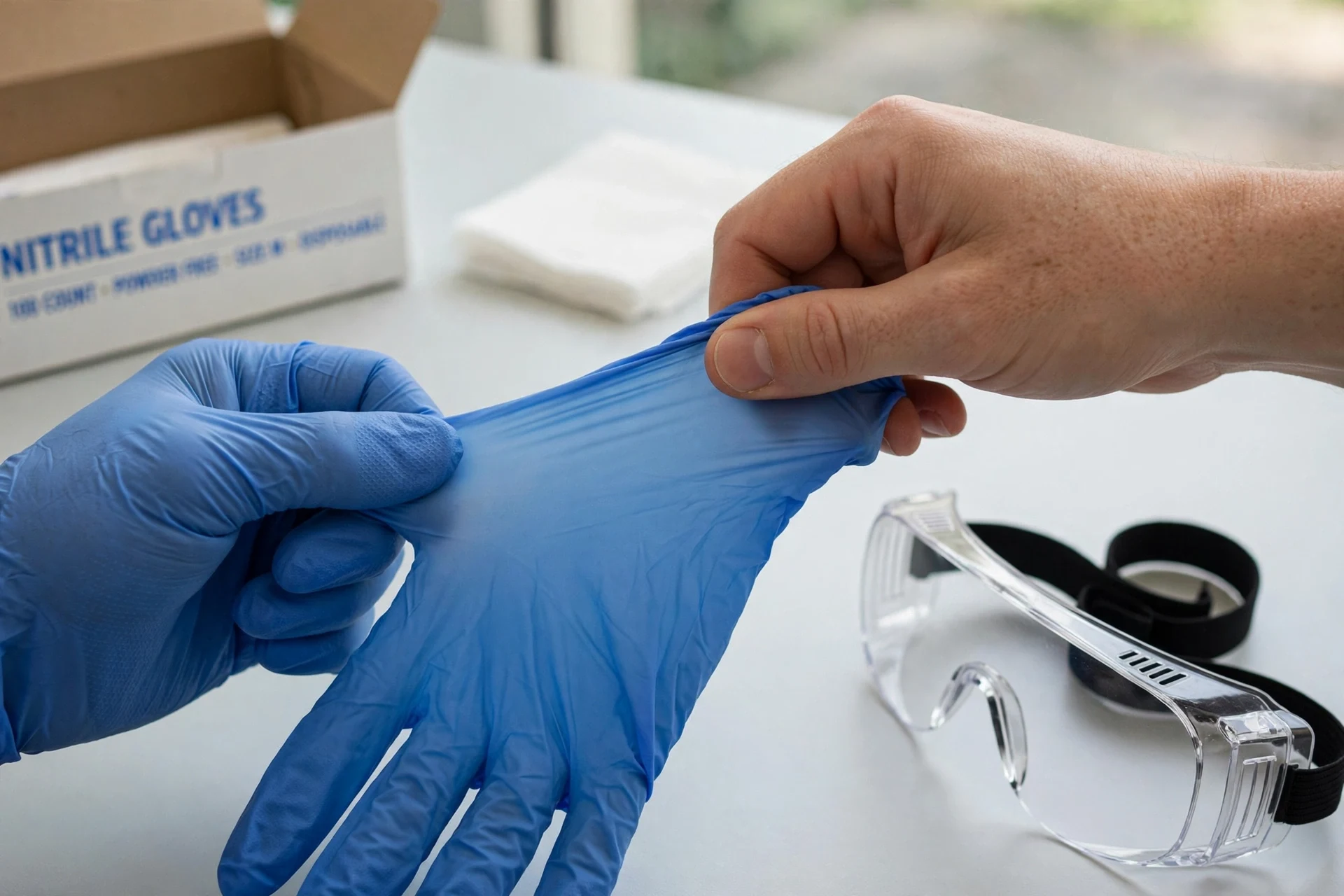
- Gloves before you touch anything.
Nitrile gloves (not latex, if anyone has an allergy). Universal precautions — the OSHA principle — means treating every blood spill as if it were infectious, because you can’t tell by looking.
- Never mix bleach with ammonia or acids.
The combination releases chloramine or chlorine gas, which can injure your lungs in an enclosed space. One disinfectant at a time, with ventilation.
- Respect contact time.
A disinfectant only works if the surface stays visibly wet for the full time on the product label. Spraying and immediately wiping is the most common disinfection mistake in homes.
- Contain the waste properly.
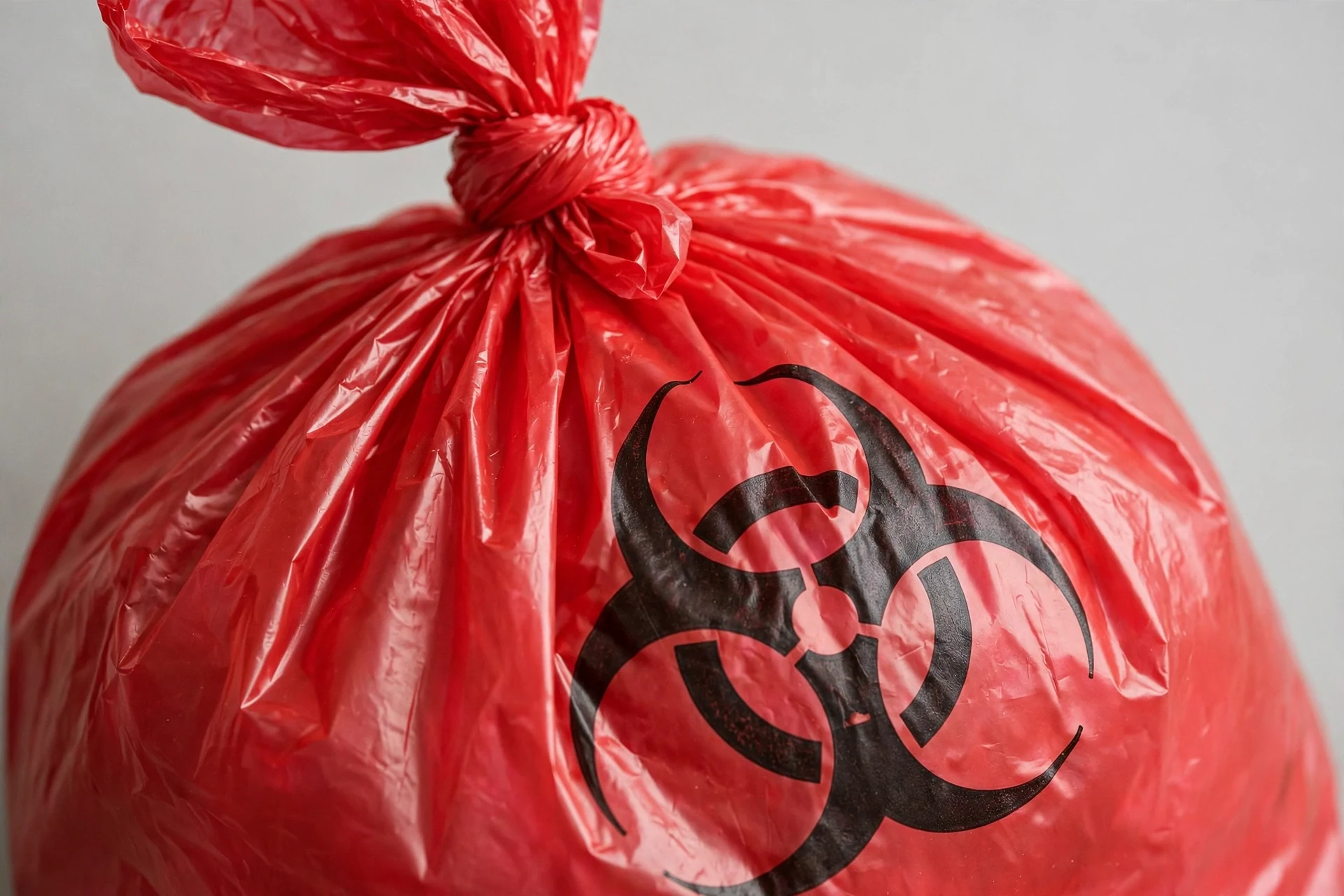
Contaminated materials go in a sealed bag — a red biohazard bag if you have one, a doubled trash bag if you don’t. Sharps go only in a rigid, puncture-proof container, never loose in a bag.
- Know the DIY boundary.
Small, known-source spills on hard surfaces: manageable. Large volumes, unknown sources, blood soaked into porous materials, or anything involving decomposition: stop and get professional guidance. Our blood safety guide draws that line in detail.
The biohazard guides, in depth
Each guide below takes one piece of this hub and goes deep — definitions, pathogen science, disposal rules, and the practical protocols.
What is considered a biohazard?
The full definition, edge case by edge case: blood, bodily fluids, sharps, medical waste, animal waste, mold, sewage — what counts, what surprisingly doesn’t, and why the distinction matters.
What is biohazard cleanup called?
The industry’s own terminology, decoded: remediation vs. restoration vs. hazmat — what each term signals about the company using it, and which one you actually need.
Bloodborne pathogens explained
Hepatitis B, hepatitis C, and HIV — how each spreads, how long each survives outside the body, and the OSHA standard written around them, in plain language.
Biohazard bags: what they are and when they’re required
Red bags, labeling rules, and the line where household waste becomes regulated medical waste — plus what to use when you don’t have the official bag.
Is dried blood dangerous?
The myth-vs-data calibration: what CDC transmission data actually says about dried blood, and the precautions that are genuinely warranted versus the fear-based version.
How to clean blood off walls
Painted drywall vs. tile: the stain-removal and disinfection protocol in a single pass, including what to do when blood has soaked past the paint.
Does bleach kill bloodborne pathogens?
Yes — if you mix it right and respect contact time. Ratios, what bleach can’t do, and when to reach for an EPA-registered disinfectant instead.
Common questions about biohazards
What is considered a biohazard?
Biological material that can carry disease: human blood, bodily fluids contaminated with blood, contaminated sharps, and medical or infectious waste. The key factor is infection risk plus exposure — your own small cut is a first-aid issue, while someone else’s blood in volume is a biohazard. See our full definition guide for the edge cases.
What are bloodborne pathogens?
Disease-causing microorganisms carried in blood — principally hepatitis B, hepatitis C, and HIV. OSHA’s bloodborne pathogens standard (29 CFR 1910.1030) sets the safety rules for occupational exposure, and its principles (gloves, disinfection, proper disposal) apply to home cleanups too.
Is dried blood actually dangerous?
It can be. Hepatitis B survives in dried blood for at least 7 days (CDC), so “it’s dry” is not the same as “it’s safe.” That said, HIV does not transmit through dried blood or environmental surfaces. Treat dried blood with the same basic precautions as fresh — gloves and disinfection — without the panic.
Does bleach kill bloodborne pathogens?
Yes, when used correctly: a fresh 1:10 bleach-to-water solution, applied to a pre-cleaned surface and left visibly wet for the label’s contact time. Bleach loses strength once mixed (make it fresh daily) and never mix it with ammonia or acids. Our bleach guide covers ratios and limits.
When do I need a biohazard bag instead of a trash bag?
Use a red biohazard bag for blood-soaked materials, contaminated PPE, and anything from a medical or infectious-waste context. For a small household spill, a doubled regular trash bag, sealed, is acceptable — the red bag matters most when waste enters regulated disposal streams.
Can I handle a small biohazard cleanup myself?
Small, known-source spills on hard, non-porous surfaces — yes, with gloves, proper disinfection, and correct disposal. Large volumes, unknown sources, porous materials soaked through, or any decomposition context — get professional guidance first. When in doubt, stop and read the relevant guide above before deciding.
Sources
- OSHA Bloodborne Pathogens Standard, 29 CFR 1910.1030 — exposure control, universal precautions, decontamination. osha.gov
- CDC — bloodborne pathogen transmission data, hepatitis B environmental survival, HIV per-act transmission estimates. cdc.gov
- EPA — disinfectant registration and label-direction guidance (List N and general disinfectant use). epa.gov
Pathogen survival figures are CDC-published values. State medical-waste rules vary — check your state’s environmental or health department for disposal specifics.
Not sure your situation qualifies as a biohazard?
If the spill is large, from an unknown source, or soaked into materials you can’t fully clean — or if there’s any decomposition involved — read what professional biohazard cleanup actually involves before you decide your next step.